
Doppler
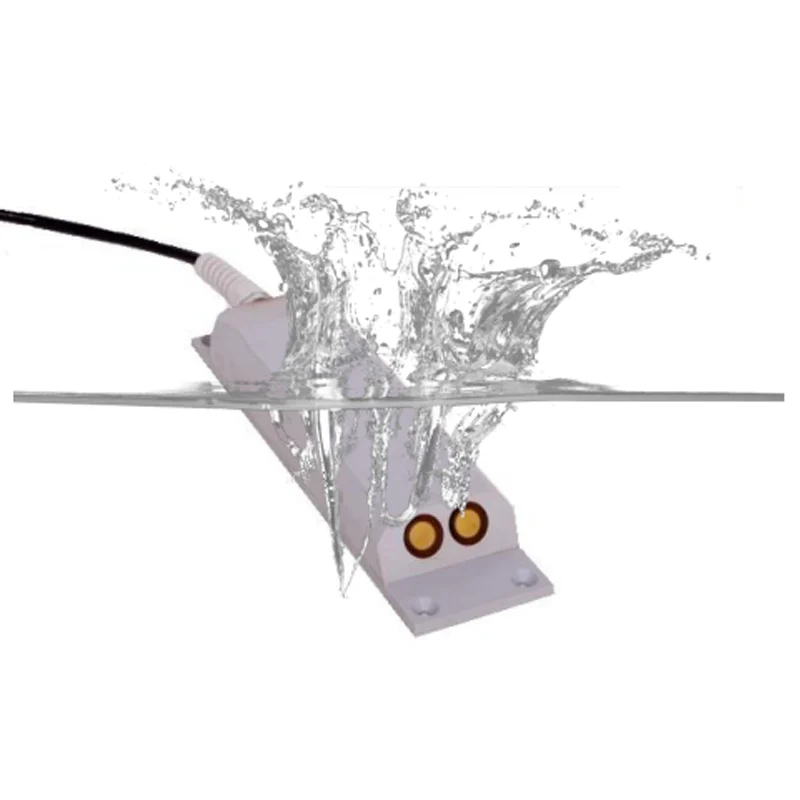
AM-D-DFM Doppler Flow Sensor
RS485 Doppler flow sensor, not a meter: 0.03–5 m/s velocity, 0.05–10 m level, 7.2–15 V DC, for a host to compute flow.
- Model
- AM-D-DFM
- Category
- Doppler
- Outputs
- RS485
- Lead time
- 7–10 working days for standard
- MOQ
-
1 pc
10 pcs for OEM - OEM available
- Yes
This is a sensor, not a meter. It measures how fast the water moves from the Doppler shift of the particles and bubbles carried in it, reads depth with a pressure sensor and water temperature with a second sensor, and answers on RS485. A totalizer, RTU or logger asks for those three numbers at the interval you set and does the flow arithmetic itself — which is what makes it suit open channels, sewers and irrigation intakes running on battery or solar power.
The boundary is that you supply the host. There is no display and no 4–20 mA output: a PLC that wants a current loop, or an operator who wants to read a number off the instrument, needs the AM-DFM — the complete Doppler unit with a screen and its own 4–20 mA and relays — and the two model names differ by a single letter. It also needs 15 cm of water over the sensor, and enough suspended solids in the water to reflect the pulse.
Technical specifications
| Measuring principle | Ultrasonic Doppler shift for water velocity; a pressure sensor for water level and a temperature sensor for water temperature |
|---|---|
| Velocity range | 0.03–5.00 m/s |
| Velocity accuracy | ±1.0 % ±1 cm/s |
| Water level range | 0.05–10 m |
| Level accuracy | ±0.5 % ±0.5 cm |
| Water temperature range | −10 to +60 °C |
| Temperature accuracy | ±1 °C |
| Working voltage | 7.2–15 V DC |
| Current consumption | 6.5 mA quiescent at 12 V; about 85 mA while collecting |
| Data update cycle | 8 s, factory default |
| Interface | RS485, Modbus RTU; 9600 baud, address 01H, 8 data bits, no parity, 1 stop bit |
| Data format | IEEE754 single-precision, four bytes per value |
| Housing | PVC; 25 cm long, 7 cm wide, 3 cm thick |
| Cable | 15 m air-conducting cable, factory default |
| Minimum water depth | 15 cm from the installation base plate; 20 cm or more preferred |
| Mounting height | About 5 cm above the channel floor, raised where silt and weed collect |
| Probe temperature | Must not exceed 60 °C; keep out of prolonged direct sun |
| Host | A totalizer, RTU or DTU polls the sensor and computes flow; one host can carry several sensors |
Every value above is on the datasheet: AM-D-DFM Doppler Flow Sensor Datasheet (PDF · 521.6 KB)
What it is not the answer for
Read this before asking for a price: one of these conditions is what turns a good meter into a bad installation.
- A panel that expects to read the value directly: there is no display and no 4–20 mA output — the sensor answers RS485 only, so a host has to ask and do the arithmetic
- A host that holds strict standard Modbus timing: the file calls its protocol a non-standard Modbus, and the sensor needs at least six seconds to answer a comprehensive read
- Less than 15 cm of water above the mounting base plate: the manual says readings below that are biased, and prefers 20 cm or more
- Clear water carrying almost nothing: the shift comes from particles and bubbles moving with the water, so a clean stream gives the pulse little to reflect from
- A pressurised full pipe: the level channel is a pressure sensor vented to atmosphere through the air tube, so the water needs a free surface
- A probe in all-day sun or in a line that freezes: the file caps the probe at 60 °C and says to take it out of the water before winter
If you want one instrument that displays the flow and hands it on as 4–20 mA with relays, this sensor is not it — the AM-DFM is the complete Doppler unit, with the screen and the outputs built into the converter.
Maintenance and service life
High-solids water sets the servicing schedule: the manual says to clean the silt off the ultrasonic transducer and the pressure sensor regularly, or the pressure port blocks and the level, and therefore the flow, goes wrong. Check the air tube every visit — a kink or a drowned vent reads a false depth — keep the vent end pointing down, and lift the unit out of the water before winter.
Behind the instrument
How it is built and tested
Coil winding, the calibration bench, the plant floor — and an overseas customer's factory audit.
What buyers ask before ordering
- Is this the AM-DFM Doppler flow meter?
- No. The AM-D-DFM is a sensor: it measures velocity, level and temperature and answers on RS485, and a totalizer, RTU or logger has to ask it and do the arithmetic. The AM-DFM is the complete unit, with a screen and its own 4–20 mA and relay outputs. The names differ by one letter, so check the order line.
- Can it drive a 4–20 mA input, or show the reading locally?
- Neither. The file gives one interface — RS485 with Modbus RTU at 9600 baud, address 01H, eight data bits, no parity, one stop bit — and no display; each value arrives as an IEEE754 single-precision number of four bytes. A panel that wants a current loop needs the AM-DFM, or a host in between.
- How much water does the sensor need?
- At least 15 cm from the installation base plate, and the manual states that readings taken below 15 cm are biased; it prefers 20 cm or more. Mount it about 5 cm above the channel floor, higher where silt and weed collect, and below the lowest level you need to measure.
- What does it draw, and will a battery run it?
- Quiescent current is 6.5 mA at 12 V, and about 85 mA while it collects, which lasts at least six seconds after the host asks for data. Working voltage is 7.2–15 V DC, so battery or solar is fine; off mains, the manual asks for a linear supply, because switching ripple interferes with the ultrasonic measurement.
- Why does my poller time out?
- Because it does not collect until the host asks, and then needs at least six seconds before it answers the comprehensive read — the file calls the protocol a non-standard Modbus for that reason. Set the timeout above six seconds, or read the registers one at a time: depth, temperature and velocity each have their own.
- What do you need from me to quote?
- What the host is — totalizer, RTU or logger — the channel or pipe shape and size, the depth range you expect, the sediment in the water, whether the site has power, and whether the 15 m air-conducting cable reaches your cabinet. Anything other than 15 m has to be stated on the order.
Still not sure which version fits your line? Send the medium and the process conditions — we answer with the configuration, not a catalogue.
Applications
Where this model is used
Each application names a measuring point and the conditions that decide the selection.
WW-OC
Open Channel and Outfall Discharge
Discharge and outfall flow for permit reporting, including channels that were never built to a standard drawing.
WW-FL
Municipal Wastewater Inlet Flow Measurement
Inlet and outlet flow in raw sewage, where solids, gas entrainment and short straight runs defeat clean-liquid meters.
Elsewhere in the range
Other models in Doppler
The same category holds the models that solve the neighbouring problem, and the price difference is usually smaller than the cost of the wrong principle.
Measuring point does not match the table above?
Send the medium, the pipe size and the output your control system expects. We answer with the principle that fits, or with the reason none of ours does.