19 instruments
Flow Measurement
Flow meters chosen by medium conductivity, solids and bubbles, pipe or channel geometry and the output the plant needs.
Send your process data. Get a matched instrument in 1 business day. Chosen by principle, calibrated before delivery.
Popular: Flow MetersLevel SensorsWater AnalyzersPressure Transmitters
What we measure
Grouped by what is being measured; each family holds the principles inside it and the media they suit.
19 instruments
Flow meters chosen by medium conductivity, solids and bubbles, pipe or channel geometry and the output the plant needs.
12 instruments
Level instruments chosen by range and blind zone, foam, steam, agitation, and whether the medium’s density is stable.
3 instruments
Pressure sensors and controllers for pump station pipework and process pressure, including interlocks.
3 instruments
Online water quality instruments for wastewater, drinking water, surface water and industrial processes.
Catalogue
Two from flow, two from level and two from pressure, each with the one line an engineer reads first. The rest of the range is one click away.
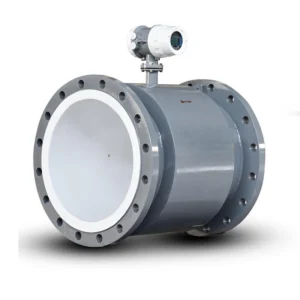
Obstructionless electromagnetic flow meter for conductive liquids and two-phase slurries, DN6–DN2600, with five liners and seven electrode materials.
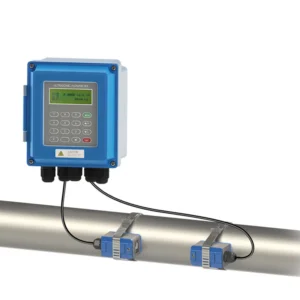
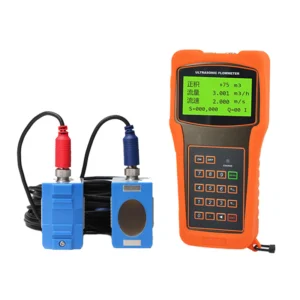
Wall-mounted clamp-on ultrasonic flow meter for existing pipes, installed without cutting the line or stopping the process.
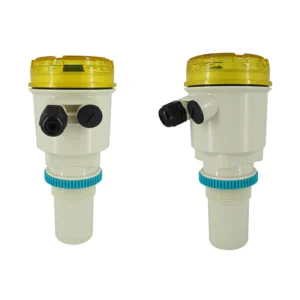
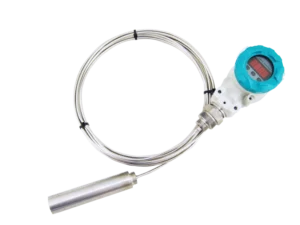
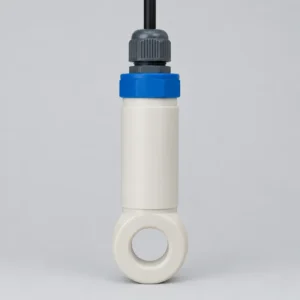
Non-contact ultrasonic level meter for open tanks, sumps and channels, with a small blind zone and a Modbus output.
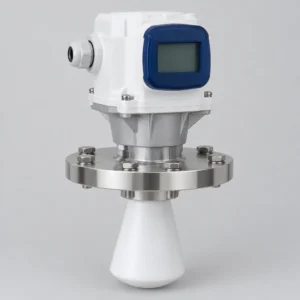
80 GHz radar level transmitter for foam, steam, dust and pressurised tanks, with a beam narrow enough to fit a small nozzle.
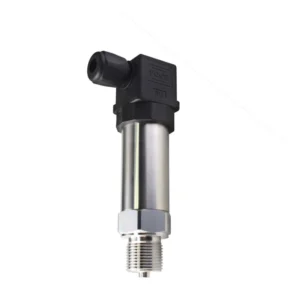
Diffused-silicon pressure transmitter, −0.1 to 100 MPa at 0.25 % FS, 316L diaphragm, 4–20 mA or RS485, IP65.
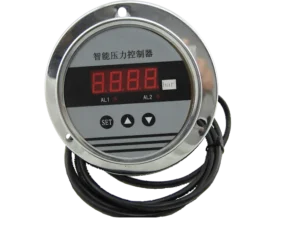
Digital pressure controller for pump start-stop and alarm logic, with two relays and a retransmitted 4-20 mA signal.
Applications
One measuring point, solved end to end: the conditions that decide the principle, the instruments, and the scope of supply.
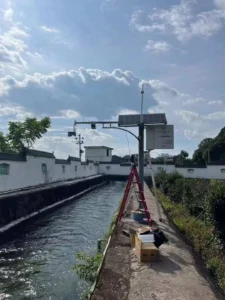
District metering and pressure management for distribution networks, where night flow and peak demand differ by an order of magnitude.
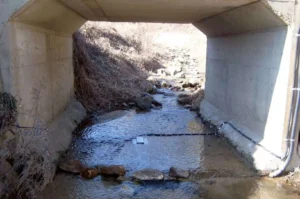
Sludge transfer flow and blanket level in settling tanks, where coating and low velocity defeat clean-liquid instruments.
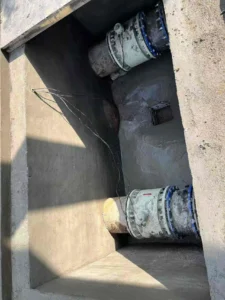
Flow, level and water quality in chemical, food and pharmaceutical processes, where wetted materials and signal compatibility decide the choice.
How a point gets solved
Three steps, in the order they decide the outcome.
Medium, pipe or channel geometry, temperature, pressure, conductivity, solids and the output the control system expects.
The application package names the principle the process calls for, and the conditions under which another one is the better answer.
Range, wetted material, output and mounting are fixed, the supplied configuration is written down, and the instrument travels with its datasheet.
Behind the instrument
Coil winding, the calibration bench, the plant floor — and an overseas customer's factory audit.
What an order includes
Field notes
The conditions, the failures they cause, and the checks that catch them.
Instrument price is the smallest part of the number that matters: consumables, access and verification decide the second-year cost.
Couplant, straight run and mounting position cost a clamp-on ultrasonic more accuracy than the electronics ever do.
A zero reading on a plastic pipe is almost always a grounding problem, not a meter problem. Here is how to tell the difference.
Documentation
The file behind each record, with its format and size, so you know what you are opening.
One step from here
Medium, line or channel size, the flow or range you expect, and what the control system reads. An engineer answers within one business day with the principle, the model and the lead time — or with the reason none of ours fits.
Ask for a quote
A name, an email and the conditions are all a first answer needs.