
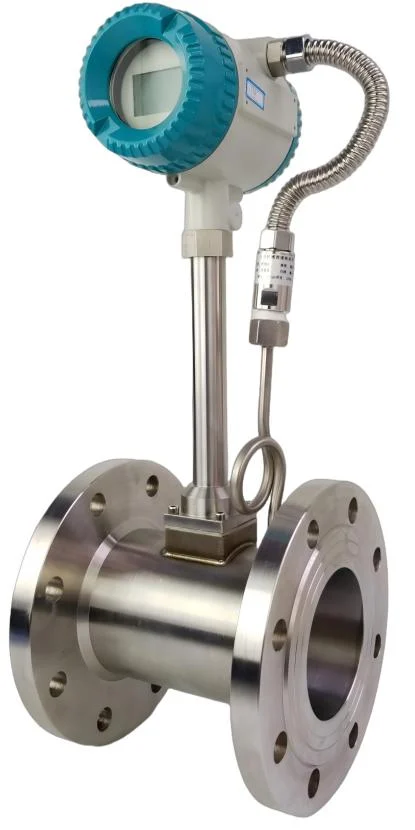
Vortex
AM-VFM Vortex Flow Meter
Vortex flow meter for liquid, gas and steam — DN15–DN300 full bore, ±1 % of reading, pulse or 4–20 mA, IP65.
- Model
- AM-VFM
- Category
- Vortex
- Outputs
- Pulse, 4–20 mA
- Lead time
- 7–10 working days for standard
- MOQ
-
1 pc
10 pcs for OEM - OEM available
- Yes
A vortex meter puts a body across the pipe and counts the vortices it sheds: the frequency rises with velocity, and velocity through a known bore gives volume. Because the counting element is the flow itself, there is nothing to wear — the datasheet specifies no moving parts and no mechanical wear — and the pressure loss is low. It reads liquid, general gas and steam on the same body, from DN15 full bore to DN2000 as an insertion.
The boundary is the bottom of the range. A vortex needs enough velocity to shed cleanly, so the datasheet asks for the working flow to sit between one-half and two-thirds of the upper limit; a large pipe at a trickle is a sizing error, not a meter fault. What you give up is the low end, tolerance of pulsation and vibration, and any use on media that coat the shedder — for those, the electromagnetic meter is the cheaper answer.
Technical specifications
| Measuring principle | Vortex shedding from a body in the line, for liquid, general gas and steam; no moving parts and no mechanical wear |
|---|---|
| Measuring medium | Liquid, general gas, steam |
| Nominal diameter | DN15–DN300 full bore; DN150–DN2000 insertion; DN2000 and above on agreement |
| Accuracy, full bore | ±1 % or ±1.5 % of reading |
| Accuracy, insertion | ±1.5 % or ±2.5 % of reading |
| Medium temperature | −40 to +100 °C normal temperature; 100–250 °C medium temperature; 100–320 °C high temperature |
| Nominal pressure | 1.6 MPa, 2.5 MPa or 4.0 MPa; above 4.0 MPa on agreement |
| Body material | SS304; other materials on agreement |
| Protection | IP65; other ratings on agreement |
| Power supply | 12 V DC for three-wire pulse; 24 V DC for three-wire pulse or two-wire current; 3.6 V lithium battery, dual supply |
| Ambient temperature | −20 to +55 °C |
| Relative humidity | 5–90 % |
| Atmospheric pressure | 86–106 kPa |
| Mounting | Flange mount or clamp-on mount |
| Liquid flow range | 1–10 m³/h at DN20 rising to 180–1800 m³/h at DN300 |
| Gas and steam flow range | 5.5–50 m³/h at DN20 rising to 1380–11,000 m³/h at DN300 |
| Pulse output frequency | 40–396 Hz at DN20 on liquid, falling to 2–22 Hz at DN300 |
| Sizing point | The working flow should sit between one-half and two-thirds of the meter's upper limit |
Every value above is on the datasheet: AM-VFM Vortex Flow Meter Datasheet (PDF · 202.3 KB)
What it is not the answer for
Read this before asking for a price: one of these conditions is what turns a good meter into a bad installation.
- Lines running below the meter's lower limit: the vortex trail stops forming and the reading drops out, which is why the datasheet sizes the working flow at one-half to two-thirds of the upper limit
- Pulsating flow from a reciprocating pump or a fast-closing valve: the meter counts a shedding frequency, and a pulse imposed on the flow rides through that count
- Pipework with heavy vibration: a vortex meter reads a frequency, and a vibrating line adds frequencies of its own
- Viscous, dirty or fibre-bearing media: the vortex has to form cleanly behind the body, and a film or a strand on that body changes when it sheds
- A free surface — a channel, a partly filled pipe, a manhole: the datasheet gives a nominal diameter with a flange or clamp-on joint, which means a full pipe
Where the line runs slow, pulses, or carries solids that coat the shedder, the vortex principle has nothing steady to count — the electromagnetic meter reads a full pipe of conductive liquid without a shedding body, and the Coriolis meter adds mass and density for dosing and recipe lines.
Maintenance and service life
The datasheet specifies no moving parts and no mechanical wear, so servicing is not a spare-parts routine. What it asks of you is a clean shedder: media that deposit leave a film on the body and the shed frequency drifts, so inspect when the total stops matching the plant. Keep the cable and the clamp-on or flange joint sound at the same visit, and re-check the sizing if the duty flow changes.
Behind the instrument
How it is built and tested
Coil winding, the calibration bench, the plant floor — and an overseas customer's factory audit.
What buyers ask before ordering
- Can it measure steam, or only water?
- Both, and the datasheet lists two versions: AM-VFM-L for liquid, AM-VFM-G for gas and steam. The medium temperature bands are −40 to +100 °C, 100 to 250 °C and 100 to 320 °C, and the body is rated 1.6 MPa, 2.5 MPa or 4.0 MPa, with anything above 4.0 MPa supplied on agreement.
- What accuracy do I get?
- ±1 % or ±1.5 % of reading on the full-bore build from DN15 to DN300, and ±1.5 % or ±2.5 % of reading on the insertion build from DN150 to DN2000. The figure is against reading rather than full scale, so it holds as the flow falls — down to the lower limit of the size you chose.
- How do I pick the size?
- Size on flow, not on the pipe: the datasheet's rule is that the working flow should sit between one-half and two-thirds of the meter's upper limit. The liquid table runs from 1–10 m³/h at DN20 to 180–1800 m³/h at DN300, and the bore that comes out may be smaller or larger than the pipe.
- What supply and output do I get?
- Three: 12 V DC with a three-wire pulse output, 24 V DC with three-wire pulse or two-wire current, or a 3.6 V lithium battery on dual supply. The pulse frequency is given per size — 40–396 Hz at DN20 on liquid, 2–22 Hz at DN300 — so the counter's input has to match the size you order.
- How is it fitted?
- Flange mount or clamp-on mount, as the two photographs show. Full bore covers DN15–DN300 and the insertion version DN150–DN2000; protection is IP65 with other ratings on agreement; ambient is −20 to +55 °C at 5–90 % relative humidity and 86–106 kPa.
- What do you need from me to quote?
- The medium and whether it is liquid, gas or steam, the pipe size, the common and maximum flow in m³/h, the temperature and pressure at the point, and whether the receiving system counts pulses or reads a current. The flow table in the datasheet is indexed on exactly those numbers.
Still not sure which version fits your line? Send the medium and the process conditions — we answer with the configuration, not a catalogue.
Applications
Where this model is used
Each application names a measuring point and the conditions that decide the selection.
WW-IP
Industrial Process Measurement
Flow, level and water quality in chemical, food and pharmaceutical processes, where wetted materials and signal compatibility decide the choice.
WW-WD
Water Distribution District Metering
District metering and pressure management for distribution networks, where night flow and peak demand differ by an order of magnitude.
Elsewhere in the range
Other models in Flow Measurement
The same category holds the models that solve the neighbouring problem, and the price difference is usually smaller than the cost of the wrong principle.
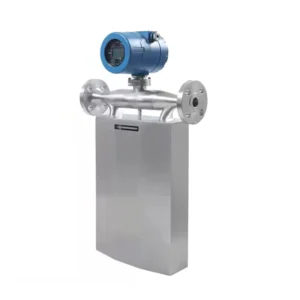
AM-CMFM
AM-CMFM Coriolis Mass Flow Meter
Coriolis mass flow meter that reads mass, density and temperature from one tube — DN1–DN150, for dosing and recipe lines.
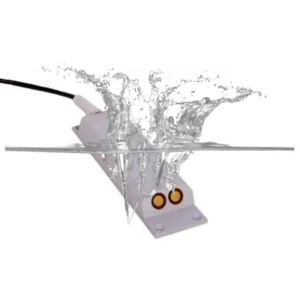
AM-D-DFM
AM-D-DFM Doppler Flow Sensor
RS485 Doppler flow sensor, not a meter: 0.03–5 m/s velocity, 0.05–10 m level, 7.2–15 V DC, for a host to compute flow.
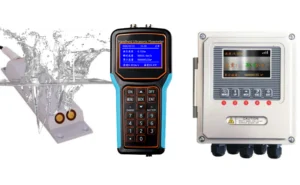
AM-DFM
AM-DFM Doppler Flow Meter
Doppler flow meter for channels, manholes and partly filled pipes: surface velocity plus water level, no weir or flume required.
Measuring point does not match the table above?
Send the medium, the pipe size and the output your control system expects. We answer with the principle that fits, or with the reason none of ours does.