
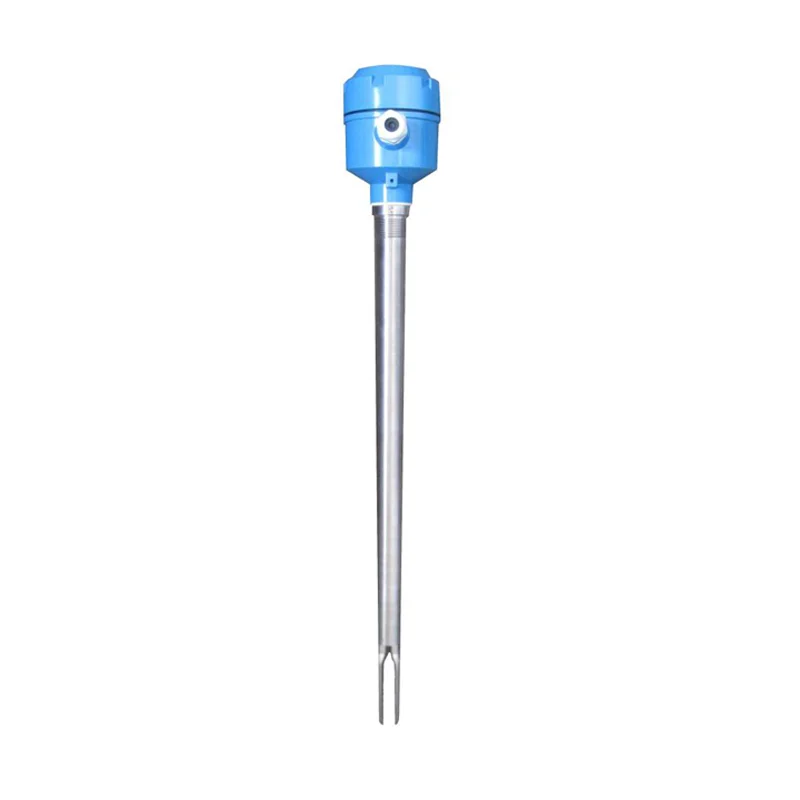
Point Level Switch
AM-FLS Fork Level Switch
Vibrating fork point-level switch for tanks of powder or liquid: one answer, wet or dry, and no calibration to drift.
- Model
- AM-FLS
- Category
- Point Level Switch
- Lead time
- 7–10 working days for standard
- MOQ
-
1 pc
10 pcs for OEM - OEM available
- Yes
A fork level switch answers one question and only one: is the medium at this height, or is it not. Two piezo crystals drive the fork at roughly 200 Hz; when the medium covers it, the vibration stops and the contact changes. There is no reading to calibrate and no zero to drift, which is why this is still the instrument on the tank that has to work after ten years of being ignored.
It earns its place on the awkward media — cement, sugar, plastic pellets, dye powder, milk, pulp, sludge with sediment — and it loses it on anything that coats the fork, anything that attacks the copper alloy or stainless tines, and particles larger than 10 mm. Above 60 °C in the vessel the remote version keeps the electronics out of the heat; the rest is placement, and the datasheet’s four wrong ways to mount it are worth reading before the nozzle is welded.
Technical specifications
| Measuring principle | Vibrating fork at about 200 Hz — a point-level switch, not a continuous level measurement |
|---|---|
| Switching output | 2 sets of NO/NC contacts, 220 V AC 5 A or 24 V DC 10 A, plus a 0/10 mA signal |
| Power supply | AC 220 V 50 Hz or DC 24 V, 1.5 W |
| Maximum vessel pressure | 1.0 MPa |
| Medium temperature | −20 to +200 °C; above 60 °C use the remote version AM-FLS-3 with up to 5 m of cable |
| Ambient temperature | −25 to +60 °C |
| Particle size | Up to 10 mm |
| Fork material | Copper alloy or stainless steel |
| Process connection | Flange PN1.0 or threaded G1½ / G1 |
| Fork amplitude | About 0.5 mm |
| Damping | About 2 s on pick-up, about 7 s on release |
| Indication and setting | Red/green LED, no display; sensitivity set with the internal potentiometer |
| Ordering example | AM-FLS-2AI-10-5M |
Every value above is on the datasheet: AM-FLS Fork Level Switch Manual (PDF · 327.8 KB)
What it is not the answer for
Read this before asking for a price: one of these conditions is what turns a good meter into a bad installation.
- Sticky, viscous or crystallising media: the fork has to shed the medium, and a coating silences it
- Media that attack copper alloy or stainless steel — check the fork and the seal before choosing, not after
- Solids larger than 10 mm, or a medium that bridges across the tines
- An inlet that discharges straight onto the fork: the datasheet's remedy is a baffle at least 20 cm away, or a different nozzle
- A continuous 4–20 mA level output: this is a switch, not a transmitter
Need the number rather than an alarm? A switch can only tell you that the level has reached the fork — the ultrasonic or radar level meter gives the level itself, and with it the trend that explains why it is rising.
Maintenance and service life
Almost nothing, and that is the point: no calibration, no zero, no drift to chase. What it does need is a clean fork. Build-up on the tines changes the damping and can leave the switch permanently wet or permanently dry, so the interval follows the medium rather than the calendar — powders that cake and slurries that set need the fork wiped on a schedule, clean liquids do not. Test it at the next shutdown by covering the fork and watching the LED and the contact change.
Behind the instrument
How it is built and tested
Coil winding, the calibration bench, the plant floor — and an overseas customer's factory audit.
What buyers ask before ordering
- Is this a level sensor or an alarm?
- A switch. It gives you a contact at the height where the fork sits, not a 4–20 mA level reading. If you need the level and not just the alarm, take the ultrasonic or radar meter — and keep the fork, if you want one, as the independent high-level you never want to rely on a transmitter for.
- Will it work in powder?
- Yes, up to 10 mm particle size: the datasheet names rice, milk powder, sugar and salt, detergent, dye, cement, stone powder and plastic pellets, with liquids from water and slurry to pulp, oil, milk and alcohol. What it cannot take is a medium that bridges across the tines or sticks to them.
- How hot can the vessel be?
- −20 to +200 °C, stated at order. Above 60 °C the electronics have to leave the nozzle: the remote version AM-FLS-3 puts the switching unit at the end of up to 5 m of cable.
- Can I get two levels from one switch?
- No. The two contact sets are for wiring — separate high and low alarms from the same fork point, or a fail-safe arrangement. A second switch point means a second unit on a second nozzle.
- How do I mount it so it keeps working?
- The datasheet lists the failures: cable entry pointing up, no baffle where the inlet discharges onto the fork, two forks mounted one above the other where they touch, and a fork tilted upward so medium collects on it. Add: keep it out of direct sun, and ground the body below 2 Ω.
- What do you need from me to quote?
- The medium and its particle size, vessel pressure and temperature, the connection you have (flange PN1.0 or thread G1½ / G1 — the datasheet shows both), and whether the switch is a high alarm, a low alarm or a pump interlock. The form on this page asks for exactly that.
Still not sure which version fits your line? Send the medium and the process conditions — we answer with the configuration, not a catalogue.
Applications
Where this model is used
Each application names a measuring point and the conditions that decide the selection.
WW-PS
Pump Station Wet Well Level and Pressure
Wet well level control and rising main pressure for sewage pump stations, where foam and grease blind a non-contact sensor.
WW-IP
Industrial Process Measurement
Flow, level and water quality in chemical, food and pharmaceutical processes, where wetted materials and signal compatibility decide the choice.
Elsewhere in the range
Other models in Level Measurement
The same category holds the models that solve the neighbouring problem, and the price difference is usually smaller than the cost of the wrong principle.
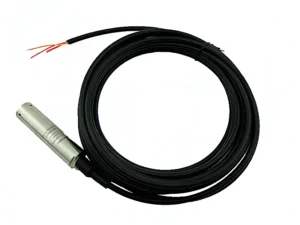
AM-P200
AM-P200 Submersible Level Transmitter
Submersible hydrostatic level transmitter, 0–200 m, 0.2 or 0.5 % FS, 4–20 mA and RS485, IP68 sensor on a vented cable.
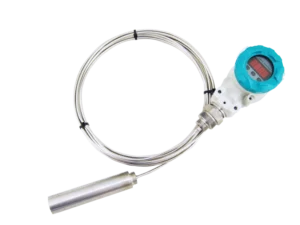
AM-P201
AM-P201 Submersible Level Transmitter with LCD Display
Submersible level transmitter with a local LCD display — the P200 series: 0–200 m, 0.2/0.5 % FS, RS485 and 4–20 mA, IP68.
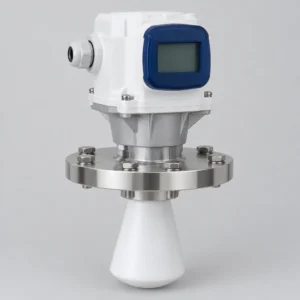
AM-RM
AM-RM 80 GHz Radar Level Meter
80 GHz radar level transmitter for foam, steam, dust and pressurised tanks, with a beam narrow enough to fit a small nozzle.
Measuring point does not match the table above?
Send the medium, the pipe size and the output your control system expects. We answer with the principle that fits, or with the reason none of ours does.