
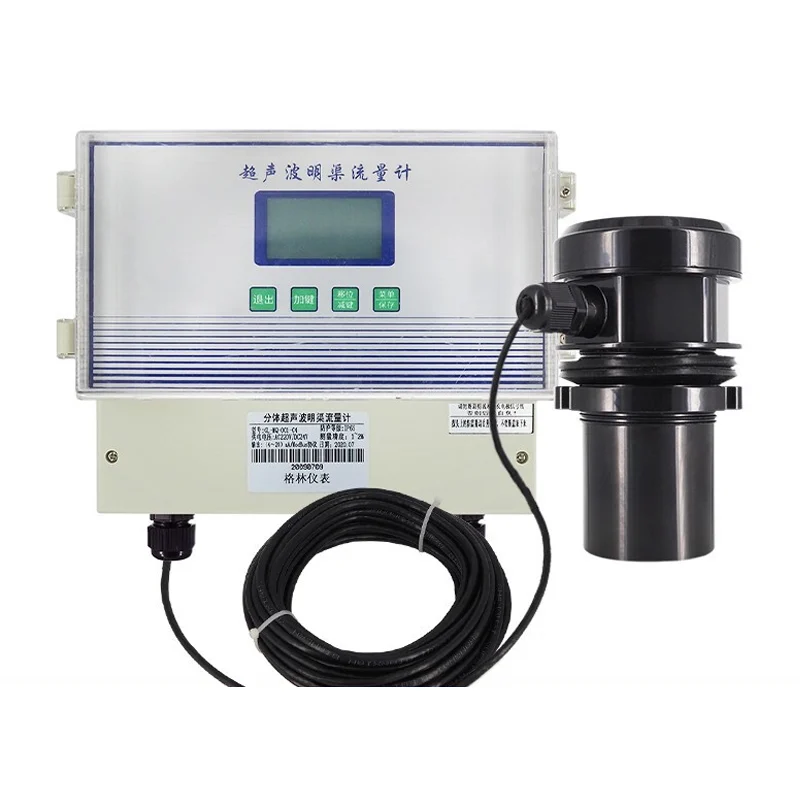
Open Channel
AM-OCFM Open Channel Flow Meter
Open channel flow meter for flumes, weirs and non-standard channels, with the site's own head-flow table entered directly.
- Model
- AM-OCFM
- Category
- Open Channel
- Outputs
- 4–20 mA, Modbus RTU, Pulse
- Lead time
- 7 working days; a bracket for a non-standard channel adds 5 working days
- MOQ
- 1 unit
- OEM available
- Yes
Technical specifications
| Level range | 0–2 m standard; up to 4 m on request |
|---|---|
| Structures supported | Parshall, Palmer-Bowlus, V-notch and rectangular weirs |
| Flow equation | Standard structures, or a user-entered head-flow table |
| Accuracy | ±1.0% of reading with a standard structure in free flow |
| Protection and power | IP67 enclosure; 12 V DC battery or 24 V DC |
| Logging | Interval logging, cumulative totaliser, 4 alarm thresholds |
What it is not the answer for
Read this before asking for a price: one of these conditions is what turns a good meter into a bad installation.
- Channels with no structure and no site rating table: the meter cannot invent a flow curve
- Submerged or backwater conditions where the structure no longer controls the level
- Weed-choked or debris-blocked channels without routine cleaning
Maintenance and service life
Clean the sensor window and remove weed or silt from the structure quarterly. Re-check the zero level after any repair to the flume or the channel lining, because every reading depends on it. Battery-powered versions need a battery change every 2–3 years.
Applications
Where this model is used
Each application names a measuring point and the conditions that decide the selection.
Elsewhere in the range
Other models in Flow Measurement
The same category holds the models that solve the neighbouring problem, and the price difference is usually smaller than the cost of the wrong principle.
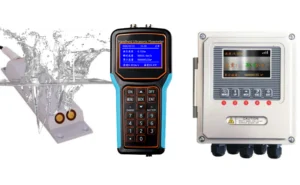
AM-DFM
AM-DFM Doppler Flow Meter
Doppler ultrasonic flow meter for sludge, slurry and raw wastewater where the liquid carries enough solids or bubbles to reflect the signal.
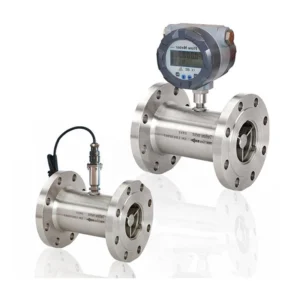
AM-LTF
AM-LTF Liquid Turbine Flow Meter
Liquid turbine flow meter for clean, low-viscosity liquids, with a wide turndown and a pulse output for batch control.
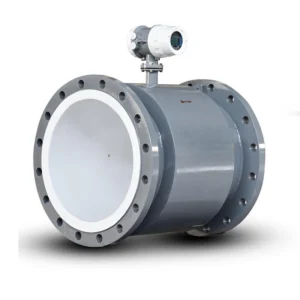
AM-MFM
AM-MFM Electromagnetic Flow Meter
Obstructionless electromagnetic flow meter for conductive liquids and two-phase slurries, DN6–DN2600, with five liners and seven electrode materials.
Content plan — certificates and case references
- The declarations that apply to this model: CE, RoHS and any hazardous-area approval, each with its certificate number and the body that issued it.
- One or two installations: plant type, medium, model supplied and what the reading is used for. Customer name only where written permission exists.
Measuring point does not match the table above?
Send the medium, the pipe size and the output your control system expects. We answer with the principle that fits, or with the reason none of ours does.