
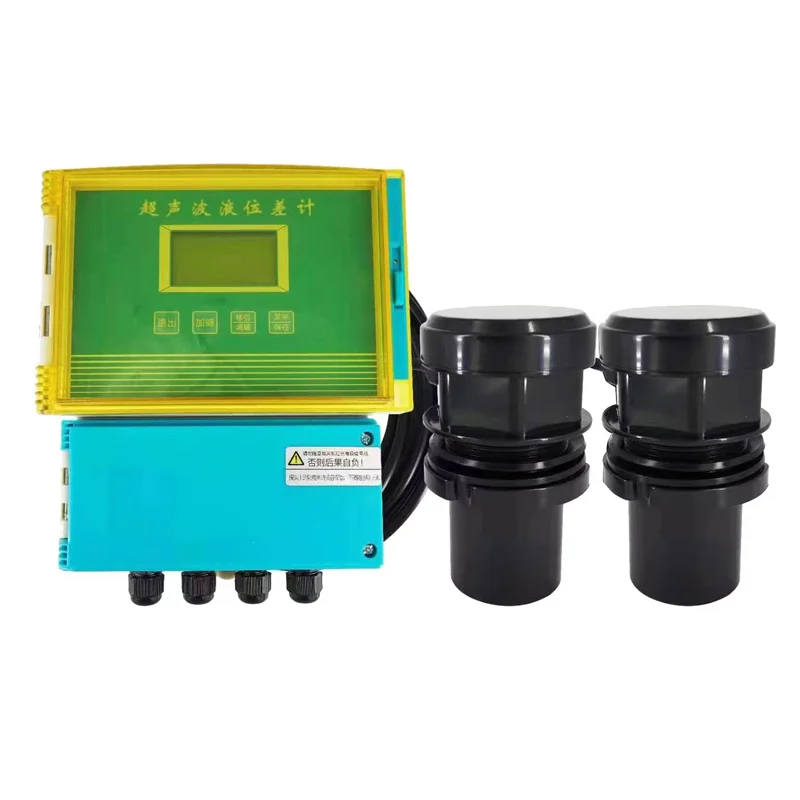
Ultrasonic
AM-ULM-D Ultrasonic Level Differential Meter
Two-probe ultrasonic differential level meter: 0–25 m difference range, ±0.5 %, two relays, 90–240 V AC or 12–24 V DC, 4–20 mA and Modbus.
- Model
- AM-ULM-D
- Category
- Ultrasonic
- Outputs
- 4–20 mA, RS485, Modbus RTU
- Lead time
- 7–10 working days for standard
- MOQ
-
1 pc
10 pcs for OEM - OEM available
- Yes
AM-ULM-D carries two ultrasonic transducers, one above each of two measuring points, and each times the echo from its own surface. What it reports is the difference between the two levels: the level before and after a bar screen, or the fall from a channel to the basin it discharges into. Difference range is 0–25 m, accuracy ±0.5 %, with 4–20 mA, RS485 Modbus RTU and two relays; supply is 90–240 V AC or 12–24 V DC.
It is not a level meter with a second input. Buy it only when the number you need is a difference: on a single tank it reads one level twice, and you pay for two transducers and a difference channel. It is also blind where any ultrasonic is — foam, heavy vapour, a churning surface — and the table stops at atmospheric pressure, so a sealed or blanketed basin is out. No medium temperature is published either, so acid and hot service cannot be signed off.
Technical specifications
| Measuring principle | Ultrasonic, non-contact: each transducer sends a pulse and times the echo from the surface below it; nothing enters the medium |
|---|---|
| Measuring points | Two, one transducer above each point; the instrument reports the difference between the two levels |
| Range (difference) | 0–25 m |
| Accuracy | ±0.5 % |
| Blind zone | < 0.25–0.8 m depending on range |
| Display resolution | 1 mm |
| Frequency | 20–350 kHz |
| Supply | 90–240 V AC or 12–24 V DC |
| Output | 4–20 mA into 510 Ω |
| Communication | RS485 Modbus RTU |
| Relay | Two relays: 250 V AC / 5 A or 30 V DC / 2 A |
| Display | LCD, liquid level or distance value |
| Ambient temperature | −20 to +60 °C |
| Pressure | Atmospheric pressure |
| Process connection | G2 |
| Electrical connection | M20×1.5 |
| Cable length | 10 m standard, extendable to 70 m |
| Protection | IP65 |
Every value above is on the datasheet: AM-ULM-D Ultrasonic Level Differential Meter Datasheet (PDF · 156.4 KB)
What it is not the answer for
Read this before asking for a price: one of these conditions is what turns a good meter into a bad installation.
- A job that only needs one level: you pay for two transducers and a difference channel, and a single ultrasonic meter reads that tank for less
- Foam on either surface: the echo is scattered, and a difference built from two poor echoes is worse than one of them
- Heavy vapour or condensing steam above either point: the acoustic pulse is absorbed and the return is lost
- A pressurised or blanketed basin: the parameter table gives atmospheric pressure only
- A medium whose temperature the datasheet does not cover: ambient −20 to +60 °C is published, no medium temperature is
- A difference greater than 25 m: the measuring range ends there, and a wider pair of probes is another instrument rather than a setting
Where the job only needs a single level, or the surface at either point foams, or the basin is sealed, one meter of the right principle beats two: a single ultrasonic for one tank, a radar where the echo is lost.
Maintenance and service life
Nothing in the wetted path moves, so the service is two transducer faces instead of one. Wipe both when the medium leaves a film — grease and dried slurry lengthen the dead zone and distort the difference before either level looks wrong. Check each probe against a hand measurement, not only the difference, and inspect both M20×1.5 glands: IP65 ends at a perished seal.
Behind the instrument
How it is built and tested
Coil winding, the calibration bench, the plant floor — and an overseas customer's factory audit.
What buyers ask before ordering
- What exactly are the two readings?
- Two transducers, one above each measuring point, each timing the echo from its own surface. The meter reports the difference between those two levels — the drop across a bar screen, the fall from a channel to the basin below — and the display also shows liquid level or a distance value at a point.
- How far apart can the two measuring points be?
- The difference range is 0–25 m, and the cable is 10 m as standard, extendable to 70 m. The datasheet does not say whether that cable figure is per transducer or in total, so send the spacing of your two points and the run back to the panel, and we will size the cable with the order.
- I only need one level — is this the wrong meter?
- Yes. AM-ULM-D is built around the difference between two probes: two transducers, one per point, and that difference is what it reports. On a single tank you pay for a second probe and a channel you never read, so a single ultrasonic meter is the cheaper and simpler answer.
- Why two relays on a differential meter?
- The parameter table gives two relays at 250 V AC / 5 A or 30 V DC / 2 A. The datasheet does not say what they are assigned to, so tell us whether they should follow the difference — a blocked screen — or one level, a dry-run trip, and we will set them that way.
- What supply does it need?
- 90–240 V AC or 12–24 V DC, both in the parameter table, alongside 4–20 mA into 510 Ω, RS485 Modbus RTU and two relays rated 250 V AC / 5 A or 30 V DC / 2 A.
- How good is ±0.5 % on a small difference?
- The accuracy is printed as ±0.5 %, the display resolves 1 mm and the blind zone runs under 0.25–0.8 m with range. If the difference you have to catch is only a few centimetres of head on a screen, send that number and the span you work over: the percentage and the resolution pull in opposite directions there.
Still not sure which version fits your line? Send the medium and the process conditions — we answer with the configuration, not a catalogue.
Applications
Where this model is used
Each application names a measuring point and the conditions that decide the selection.
WW-FL
Municipal Wastewater Inlet Flow Measurement
Inlet and outlet flow in raw sewage, where solids, gas entrainment and short straight runs defeat clean-liquid meters.
WW-OC
Open Channel and Outfall Discharge
Discharge and outfall flow for permit reporting, including channels that were never built to a standard drawing.
Elsewhere in the range
Other models in Ultrasonic
The same category holds the models that solve the neighbouring problem, and the price difference is usually smaller than the cost of the wrong principle.
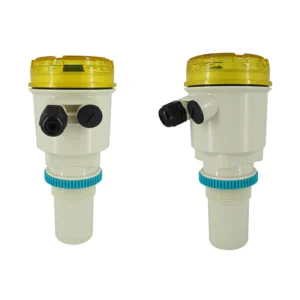
AM-ULM
AM-ULM Ultrasonic Level Meter
Non-contact ultrasonic level meter for open tanks, sumps and channels, with a small blind zone and a Modbus output.
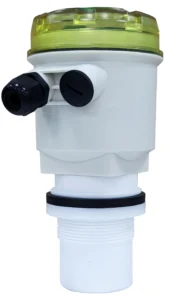
AM-ULM-B
AM-ULM-B Small Blind Area Ultrasonic Level Meter
Short-span ultrasonic level meter for shallow wells and tanks: 0–3 m, blind zone under 0.1 m, ±0.15 % and 1 mm resolution, 4–20 mA or Modbus.
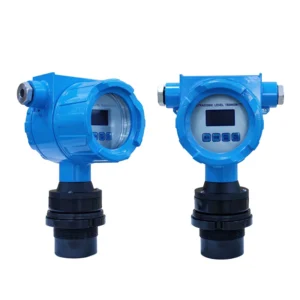
AM-ULM-EX
AM-ULM-EX Explosion-proof Ultrasonic Level Meter
Explosion-proof ultrasonic level meter for hazardous areas: Ex db ia IIC T6 Gb, 0–30 m, ±0.5 %, 1 mm resolution, 4–20 mA and RS485.
Measuring point does not match the table above?
Send the medium, the pipe size and the output your control system expects. We answer with the principle that fits, or with the reason none of ours does.