
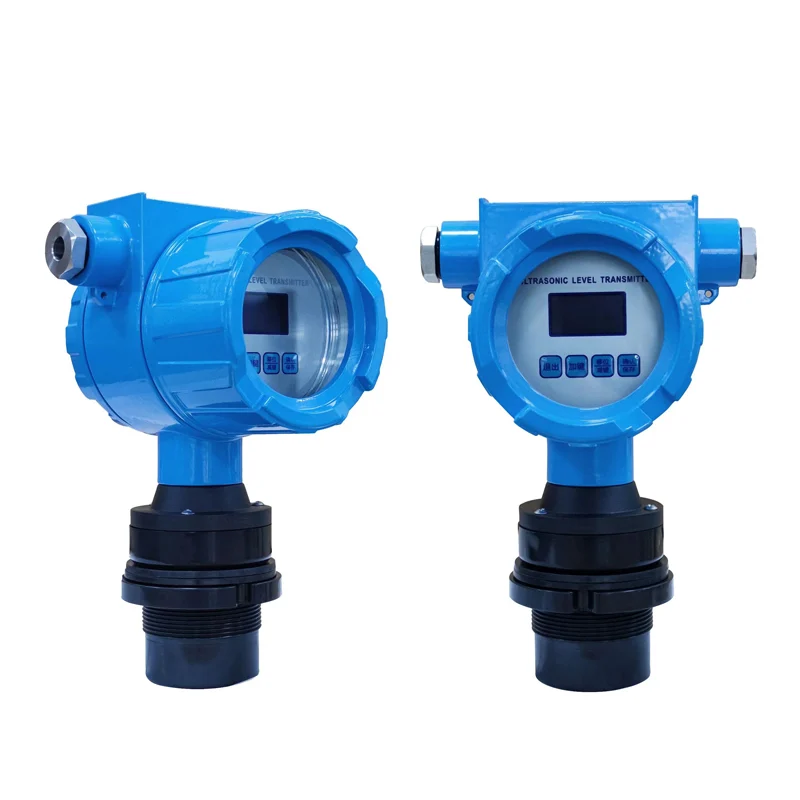
Ultrasonic
AM-ULM-EX Explosion-proof Ultrasonic Level Meter
Explosion-proof ultrasonic level meter for hazardous areas: Ex db ia IIC T6 Gb, 0–30 m, ±0.5 %, 1 mm resolution, 4–20 mA and RS485.
- Model
- AM-ULM-EX
- Category
- Ultrasonic
- Outputs
- 4–20 mA, RS485, Modbus RTU
- Lead time
- 7–10 working days for standard
- MOQ
-
1 pc
10 pcs for OEM - OEM available
- Yes
An ultrasonic level meter times a pulse from a transducer above the liquid down to the surface and back. AM-ULM-EX is the version that may stand in a hazardous area: the datasheet prints the marking Ex db ia IIC T6 Gb, with GBT11828.4-2011 as the implementation standard and JJG971-2002 as the verification regulation. Span is 0–30 m, accuracy ±0.5 %, the display resolves 1 mm and the blind zone runs under 0.25–0.8 m with range. Two-wire and four-wire variants cover 4–20 mA, RS485 Modbus and a relay.
Its value is the certification, not the range, and the boundary follows from that. The table stops at atmospheric pressure, so a blanketed or pressurised vessel is outside it; foam, heavy vapour and a churning surface leave nothing to time; and no wetted material, medium temperature or chemical-resistance data is published, so the acid, alkali and hot service the introduction names cannot be signed off from the sheet. What the buyer gives up is the wetted side, and the datasheet is silent on it.
Technical specifications
| Hazardous-area marking | Ex db ia IIC T6 Gb |
|---|---|
| Implementation standard | GBT11828.4-2011 |
| Wiring | Two-wire (AM-ULM-EX-2W) or four-wire (AM-ULM-EX-4W) |
| Range | 0–30 m |
| Accuracy | ±0.5 % |
| Blind zone | < 0.25–0.8 m depending on range |
| Display resolution | 1 mm |
| Frequency | 20–350 kHz |
| Supply | 24 V DC (two-wire); 24 V DC or 220 V AC (four-wire) |
| Power consumption | < 3 W |
| Output | 4–20 mA into 510 Ω |
| Communication | RS485 Modbus (four-wire) |
| Relay | 250 V AC / 5 A or 30 V DC / 2 A (four-wire) |
| Display | LCD |
| Ambient temperature | −20 to +60 °C |
| Pressure | Atmospheric pressure |
| Process connection | G2 |
| Electrical connection | M20×1.5 |
| Protection | IP65 |
Every value above is on the datasheet: AM-ULM-EX Explosion-proof Ultrasonic Level Meter Datasheet (PDF · 282.8 KB)
What it is not the answer for
Read this before asking for a price: one of these conditions is what turns a good meter into a bad installation.
- A surface that foams: the echo is scattered before it returns, and a meter that times echoes has nothing to time
- Heavy vapour, condensing steam or a mist above the liquid: the acoustic pulse is absorbed on the way out and the return is lost
- A pressurised or nitrogen-blanketed vessel: the parameter table gives atmospheric pressure only, and the marking covers the enclosure, not the vessel
- A medium whose temperature the datasheet does not cover: ambient −20 to +60 °C is published, no medium temperature is, so a hot acid or a chilled product cannot be checked against the sheet
- A high-level alarm set inside the top 0.25–0.8 m: the blind zone grows with range and that trip is blind where it matters
- A span longer than 30 m: the range ends there, and a longer span is another instrument rather than a setting
Where the surface foams, the vapour is heavy or the vessel runs above atmospheric pressure, the neighbouring principle is the answer: a radar that times the surface without an acoustic echo to lose, or a submersible transmitter that reads the head of water at the bottom of the sump.
Maintenance and service life
Nothing in the wetted path moves, so the service is the transducer face. Wipe it when the medium leaves a film — grease, scale or dried slurry lengthens the dead zone until the echo disappears. Check the reading against a hand measurement after cleaning, and inspect the M20×1.5 gland at every visit: IP65 ends at a perished seal, and an Ex enclosure that has lost its seal is no longer the enclosure that was marked.
Behind the instrument
How it is built and tested
Coil winding, the calibration bench, the plant floor — and an overseas customer's factory audit.
What buyers ask before ordering
- What does the marking on this meter actually cover?
- The datasheet prints Ex db ia IIC T6 Gb as the marking the meter meets, GBT11828.4-2011 as its implementation standard and JJG971-2002 as the verification regulation. The document names no certificate number and no issuing body; if your safety file needs the declaration with those on it, send the zone, gas group and temperature class you are working to and we will return what applies.
- Two-wire or four-wire?
- The AM-ULM-EX-2W is two-wire on 24 V DC. The AM-ULM-EX-4W takes 24 V DC or 220 V AC, and adds RS485 Modbus plus a relay rated 250 V AC / 5 A or 30 V DC / 2 A. Both give 4–20 mA into 510 Ω and draw under 3 W.
- How much dead space sits at the top of the vessel?
- The blind zone is printed as under 0.25 m to 0.8 m, and the datasheet ties it to the range — the longer the span, the larger the dead space. With 1 mm of display resolution that matters at the top, so set the high-level alarm below the blind zone your chosen span gives you.
- What does ±0.5 % mean over 30 m?
- The parameter table prints ±0.5 % and the display resolves 1 mm. The datasheet does not say whether the percentage is taken on the span or on the reading; over a 30 m span, half a percent is 150 mm, and that is the figure to plan with until your repeatability requirement says otherwise.
- Which media can it handle?
- The introduction names acid, alkali, salt and high temperature as the fields it suits, and the instrument is IP65 with a G2 process connection and an M20×1.5 entry. The parameter table publishes no wetted material and no medium temperature, so send the medium, its concentration and its temperature and we will say what the sheet covers.
- What do you need from me to quote one?
- The vessel depth and the band you actually use, the zone classification and gas group of the area, the supply you have — 24 V DC or 220 V AC — and whether the control system wants 4–20 mA, Modbus or a relay contact. With those we return the wiring variant and the price.
Still not sure which version fits your line? Send the medium and the process conditions — we answer with the configuration, not a catalogue.
Applications
Where this model is used
Each application names a measuring point and the conditions that decide the selection.
WW-IP
Industrial Process Measurement
Flow, level and water quality in chemical, food and pharmaceutical processes, where wetted materials and signal compatibility decide the choice.
WW-SL
Sludge Transfer and Blanket Level
Sludge transfer flow and blanket level in settling tanks, where coating and low velocity defeat clean-liquid instruments.
Elsewhere in the range
Other models in Ultrasonic
The same category holds the models that solve the neighbouring problem, and the price difference is usually smaller than the cost of the wrong principle.
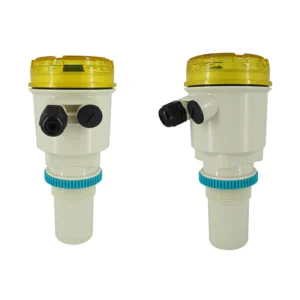
AM-ULM
AM-ULM Ultrasonic Level Meter
Non-contact ultrasonic level meter for open tanks, sumps and channels, with a small blind zone and a Modbus output.
AM-ULM-B
AM-ULM-B Small Blind Area Ultrasonic Level Meter
Short-span ultrasonic level meter for shallow wells and tanks: 0–3 m, blind zone under 0.1 m, ±0.15 % and 1 mm resolution, 4–20 mA or Modbus.
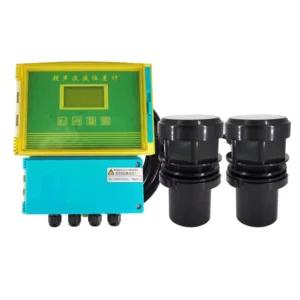
AM-ULM-D
AM-ULM-D Ultrasonic Level Differential Meter
Two-probe ultrasonic differential level meter: 0–25 m difference range, ±0.5 %, two relays, 90–240 V AC or 12–24 V DC, 4–20 mA and Modbus.
Measuring point does not match the table above?
Send the medium, the pipe size and the output your control system expects. We answer with the principle that fits, or with the reason none of ours does.