
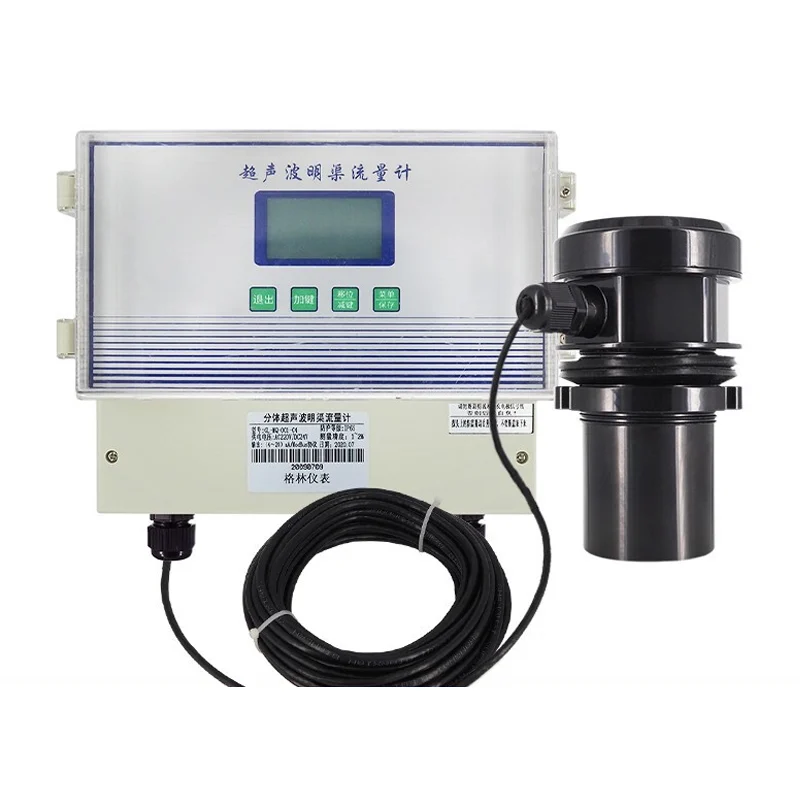
Open Channel
AM-OCFM Open Channel Flow Meter
Open channel flow meter: ultrasonic level converted through a weir or Parshall flume, 3 m level standard, 4–20 mA and RS485.
- Model
- AM-OCFM
- Category
- Open Channel
- Outputs
- 4–20 mA, Modbus RTU, Pulse
- Lead time
- 7–10 working days for standard
- MOQ
-
1 pc
10 pcs for OEM - OEM available
- Yes
An open channel has no pipe to put a meter in, so the flow is measured where the water already runs: the meter reads the liquid level and converts it through the geometry of a weir or a flume. The level is the measurement; the flow is arithmetic the instrument has been taught.
Two things therefore decide the reading before the electronics do — the structure has to control the flow, freely and without backwater, and the zero level has to be right. The datasheet names the three structures it covers — right-angle triangular weir, rectangular weir and Parshall flume — and quotes ±(1–3) %, which is the honest spread across them rather than a single number for a single weir.
Technical specifications
| Measuring principle | Ultrasonic level in the channel, converted to flow through the geometry of a weir or a flume |
|---|---|
| Structures covered | Right-angle triangular weir, rectangular weir, Parshall flume |
| Flow range | 0.1 L/s to 10 m³/s |
| Level range | 3 m standard; 5 m and 10 m on request |
| Blind zone | ≤ 0.4 m |
| Flow accuracy | ±(1–3) %, depending on the structure and its coefficient |
| Level accuracy | ±0.3 % over the 3 m span |
| Resolution | 1 mm |
| Working temperature | −20 to +55 °C |
| Power supply | AC 220 V 50 Hz, or DC 12–36 V, 3 W |
| Output | 4–20 mA for instantaneous flow; RS485 for instantaneous and cumulative flow |
| Relays | 1–4, optional |
| Protection | IP65, instrument |
| Display | Level, instantaneous flow and total flow |
| Totaliser | 12-digit decimal, clears automatically when full; queries by year, month, day and hour |
Every value above is on the datasheet: AM-OCFM Open Channel Flow Meter Datasheet (PDF · 223.2 KB)
What it is not the answer for
Read this before asking for a price: one of these conditions is what turns a good meter into a bad installation.
- A channel with no weir or flume: the datasheet's flow accuracy is quoted "according to water measuring weir", and without a structure there is no level-to-flow relationship to apply
- A submerged or backwatered structure, where the downstream level controls the flow and level stops mapping to flow
- A channel left to weed and silt: the structure's coefficient only holds while its geometry stays clean
- More than 3 m of level on the standard build — 5 m and 10 m exist, but the stated ±0.3 % level accuracy is defined over the 3 m span
- Custody transfer: ±(1–3) % follows the structure and its condition, not the electronics
No structure, or a channel that backwaters? Then open-channel arithmetic is the wrong tool — a Doppler meter reads the velocity itself in a partly filled pipe or channel and needs no weir at all.
Maintenance and service life
The instrument needs little beyond a clean ultrasonic head. The structure is what needs attention: silt in the flume throat, weed on the weir crest, and a zero level that has moved after any repair to the channel. Re-check the zero after work on the weir or the lining, and prove the totaliser against a known volume once a year.
Behind the instrument
How it is built and tested
Coil winding, the calibration bench, the plant floor — and an overseas customer's factory audit.
What buyers ask before ordering
- How does a meter that only sees level know the flow?
- The ultrasonic head sits above the channel and measures the level; a weir or flume in the channel gives level a known relationship with flow, and the meter applies it. With no structure there is nothing to convert, which is why the datasheet's flow figures are all "according to water measuring weir".
- Which weir or flume do I need?
- The datasheet covers right-angle triangular and rectangular weirs and the Parshall flume. The work at your end is to tell us which one you have and its dimensions — the throat width or the crest length — because the coefficient follows the geometry, not the instrument.
- Why is the flow accuracy a range?
- ±(1–3) % for flow, and ±0.3 % for level over the 3 m span, with 1 mm resolution. The spread is the structure's: a Parshall flume in good condition reaches the tight end, a site-built weir with a ragged crest does not.
- How deep a channel can it take?
- 3 m is standard, with 5 m and 10 m built to order. Note that the ±0.3 % level accuracy is stated over the 3 m span, so a deeper channel needs its accuracy confirmed with us rather than assumed.
- What happens if the channel is submerged?
- Not without care: once the downstream level controls the structure, level no longer maps to flow and the meter reads high. If your outfall backs up, say so when you enquire — that is the condition that sends most open-channel enquiries to a Doppler meter instead.
- What do you need from me to quote?
- The structure and its dimensions, the level range you expect, the power available at the site, whether you want relays, and what the receiving system reads — 4–20 mA, RS485 or both. The form on this page asks for exactly that.
Still not sure which version fits your line? Send the medium and the process conditions — we answer with the configuration, not a catalogue.
Applications
Where this model is used
Each application names a measuring point and the conditions that decide the selection.
WW-OC
Open Channel and Outfall Discharge
Discharge and outfall flow for permit reporting, including channels that were never built to a standard drawing.
WW-FL
Municipal Wastewater Inlet Flow Measurement
Inlet and outlet flow in raw sewage, where solids, gas entrainment and short straight runs defeat clean-liquid meters.
Elsewhere in the range
Other models in Flow Measurement
The same category holds the models that solve the neighbouring problem, and the price difference is usually smaller than the cost of the wrong principle.
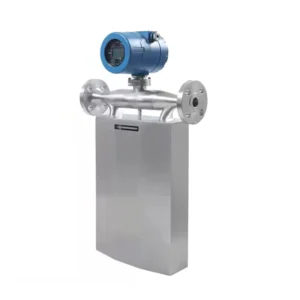
AM-CMFM
AM-CMFM Coriolis Mass Flow Meter
Coriolis mass flow meter that reads mass, density and temperature from one tube — DN1–DN150, for dosing and recipe lines.
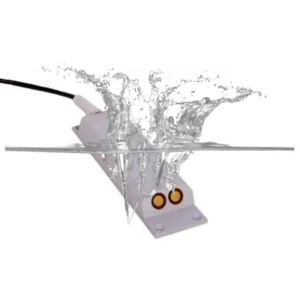
AM-D-DFM
AM-D-DFM Doppler Flow Sensor
RS485 Doppler flow sensor, not a meter: 0.03–5 m/s velocity, 0.05–10 m level, 7.2–15 V DC, for a host to compute flow.
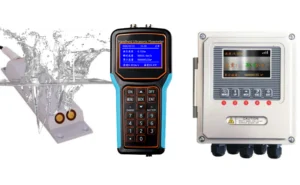
AM-DFM
AM-DFM Doppler Flow Meter
Doppler flow meter for channels, manholes and partly filled pipes: surface velocity plus water level, no weir or flume required.
Measuring point does not match the table above?
Send the medium, the pipe size and the output your control system expects. We answer with the principle that fits, or with the reason none of ours does.