
Clamp-on Ultrasonic
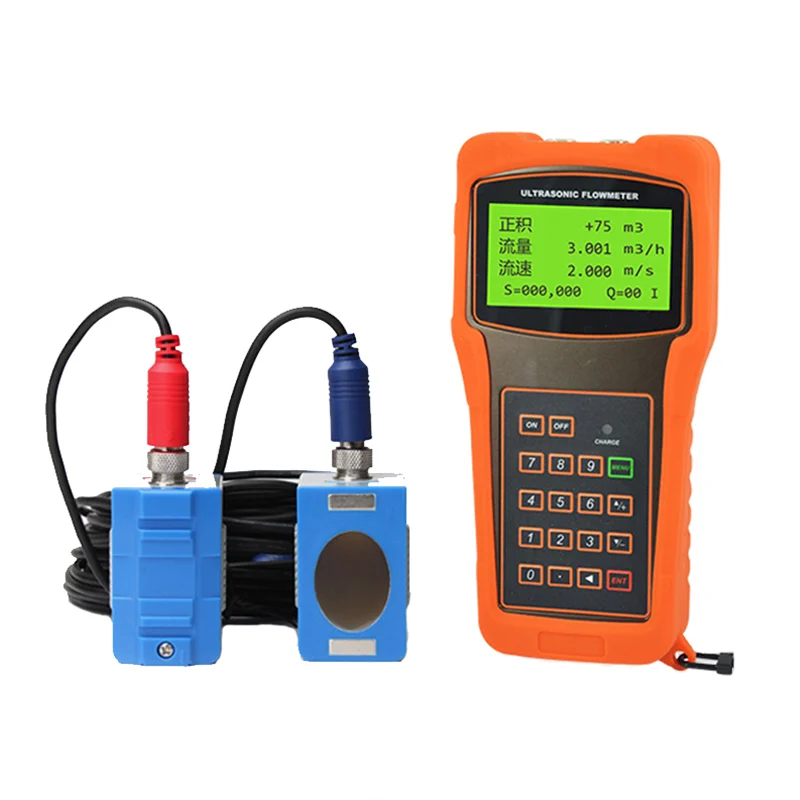
AM-ULF-H Handheld Ultrasonic Flow Meter
Handheld clamp-on ultrasonic flow meter for DN15–DN6000: ±1 % of reading, 2000-line logger, RS-232, over 12 hours per charge.
- Model
- AM-ULF-H
- Category
- Clamp-on Ultrasonic
- Lead time
- 7–10 working days for standard
- MOQ
-
1 pc
10 pcs for OEM - OEM available
- Yes
The handheld reads flow the way any clamp-on ultrasonic meter does — two transducers held on the outside of the pipe, nothing in the stream — but the electronics, the battery and a 4×16 English display sit in a 210 × 90 × 30 mm ABS case, with a 5 m cord per transducer. That is a unit one person carries along a pipe run and reads at each point, instead of a device bolted to one line.
Use it where the answer is needed once and a permanent installation is not worth the money: a survey across many measuring points, a check on a meter already installed and paid for, a balance over a short trial, or a pipe you cannot cut into. What you give up is continuity — RS-232 to a laptop instead of a 4–20 mA loop, over 12 hours per charge, and a unit brought to the pipe rather than left on it.
Technical specifications
| Measuring principle | Clamp-on ultrasonic: a transducer pair held on the outside of the pipe, no wetted parts |
|---|---|
| Pipe size | DN15–DN6000, 15–6000 mm |
| Velocity | ±32 m/s |
| Accuracy | ±1 % of reading at flow rates above 0.2 m/s |
| Linearity | 0.5 % |
| Repeatability | 0.2 % |
| Time measurement resolution | 100 picoseconds |
| Response time | 0–999 s, user-configurable |
| Totalizer | 7-digit totals for net, positive and negative flow; manual 7-digit press-key totalizer for calibration |
| Liquids | Virtually all liquids, pure or with a small quantity of tiny particles |
| Display | 4×16 English letters |
| Data logger | Built-in, over 2000 lines of data |
| Communication interface | RS-232, 75 to 57600 baud, manufacturer protocol compatible with the FUJI ultrasonic flow meter; user protocols on request |
| Security | Setup-value modification lockout, released with an access code |
| Transducer cord length | 5 m × 2 standard, 10 m × 2 optional |
| Power supply | 3 AAA built-in Ni-H batteries, over 12 hours of operation per full charge; 100–240 V AC charger |
| Housing material | ABS |
| Case size | 210 × 90 × 30 mm |
| Transducers | Tri-clamp TS-2 DN15–DN100, TM-1 DN50–DN700, TL-1 DN300–DN6000; rail HS, HM, EB-1; standard −30 to +90 °C, high-temperature set to +160 °C |
What it is not the answer for
Read this before asking for a price: one of these conditions is what turns a good meter into a bad installation.
- A stream with too little sound path: the datasheet covers pure liquids and liquids with a small quantity of tiny particles, and no more
- A pipe you cannot couple to — lined, coated, heavily scaled or unreachable wall where the transducers cannot be pressed on with couplant
- Continuous, unattended monitoring: over 12 hours per charge on three AAA Ni-H cells, and no permanent output
- A control system that expects 4–20 mA, pulse or Modbus — the interface is RS-232 on the manufacturer's protocol
- A hazardous area: no explosion-proof approval appears in the datasheet
- A liquid hotter than the transducer set allows — standard transducers are −30 to +90 °C, and only the high-temperature set reaches 160 °C
When the measurement has to run every day rather than during a survey, a fixed installation does it without a battery: the AM-ULF-W clamps onto the same pipe and stays there.
Maintenance and service life
Renew the couplant and wipe both transducer faces before each job, because a dry face costs signal long before it fails outright. Charge the three AAA Ni-H cells after every survey — over 12 hours of operation per full charge — and coil the 5 m cords without a kink at the connector. Press the manual totaliser key against a known reference now and then: that is the calibration check this unit provides.
Behind the instrument
How it is built and tested
Coil winding, the calibration bench, the plant floor — and an overseas customer's factory audit.
What buyers ask before ordering
- What pipe sizes and liquids will it handle?
- 15 mm to 6000 mm, with the transducer set chosen for the size. The datasheet covers virtually all liquids: hot, chilled, city and sea water, waste water, sewage with a small particle content, crude and diesel oil, acids, alcohols, plant effluent, beverages and ultra-pure liquids.
- What is the accuracy based on?
- ±1 % of reading at flow rates above 0.2 m/s, with linearity 0.5 %, repeatability 0.2 % and a time resolution of 100 picoseconds. Below 0.2 m/s that percentage no longer applies, so a night-flow check is read together with the velocity it shows.
- How much does it store, and how long does it run?
- The built-in logger stores over 2000 lines of data. Three AAA Ni-H cells, fully recharged, give over 12 hours of operation, and the charger accepts 100–240 V AC, so the unit travels without a supply question.
- What interface do I get?
- RS-232 at 75 to 57600 baud on the manufacturer's protocol, compatible with the FUJI ultrasonic flow meter's; a user protocol can be made to order. The datasheet lists no RS485, 4–20 mA, pulse or Modbus output, so readings leave through RS-232.
- Can it totalise, and does it print?
- It totalises: 7-digit totals for net, positive and negative flow, plus a manual 7-digit press-key totaliser for calibration checks. There is no printer in this unit — the portable AM-ULF-P carries the built-in thermal printer if a paper record is what you need.
- What can it not measure?
- A stream without enough sound path: the datasheet covers pure liquids and liquids with a small quantity of tiny particles, so a thick slurry is out. Neither is a lined or heavily scaled pipe wall, nor a point that has to feed a control loop continuously.
Still not sure which version fits your line? Send the medium and the process conditions — we answer with the configuration, not a catalogue.
Applications
Where this model is used
Each application names a measuring point and the conditions that decide the selection.
WW-WD
Water Distribution District Metering
District metering and pressure management for distribution networks, where night flow and peak demand differ by an order of magnitude.
WW-PS
Pump Station Wet Well Level and Pressure
Wet well level control and rising main pressure for sewage pump stations, where foam and grease blind a non-contact sensor.
Elsewhere in the range
Other models in Clamp-on Ultrasonic
The same category holds the models that solve the neighbouring problem, and the price difference is usually smaller than the cost of the wrong principle.
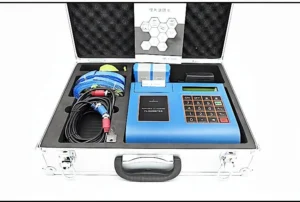
AM-ULF-P
AM-ULF-P Portable Ultrasonic Flow Meter
Portable clamp-on ultrasonic flow meter for DN15–DN6000: 20-hour battery, built-in thermal printer, ±1 % of reading, RS485.
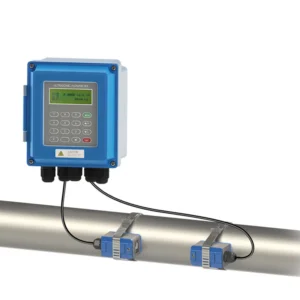
AM-ULF-W
AM-ULF-W Wall Mounted Ultrasonic Flow Meter
Wall-mounted clamp-on ultrasonic flow meter for existing pipes, installed without cutting the line or stopping the process.
Measuring point does not match the table above?
Send the medium, the pipe size and the output your control system expects. We answer with the principle that fits, or with the reason none of ours does.