
Ultrasonic
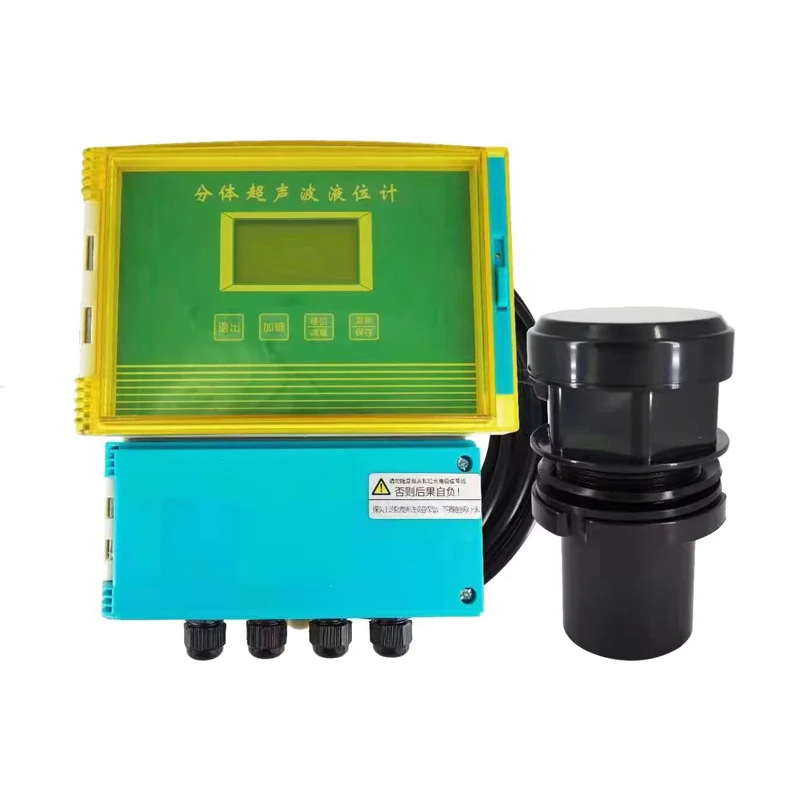
AM-ULM-S Split Type Ultrasonic Level Meter
Split ultrasonic level meter for deep wells, silos and tanks: 0–30 m, blind zone 0.25–0.8 m, ±0.5 %, 10 m cable extendable to 70 m.
- Model
- AM-ULM-S
- Category
- Ultrasonic
- Outputs
- 4–20 mA, HART, RS485, Modbus RTU
- Lead time
- 7–10 working days for standard
- MOQ
-
1 pc
10 pcs for OEM - OEM available
- Yes
AM-ULM-S puts the transducer on a cable and the electronics in a housing you can reach, which is why the span reaches 30 m: the tank top carries nothing but the sensor, and the LCD sits at the top of the riser where someone can read the level or the distance directly. It is for the deep sump, the tall silo and the tank roof where a single-piece meter would need a ladder to check.
What the buyer gives up is resolution at the top and certainty about the basis. The blind zone is quoted as under 0.25 m to 0.8 m depending on range, and ±0.5 % is printed without saying whether it is taken on span or on reading — on 30 m those two are far apart. Pressure is atmospheric only, ambient stops at +60 °C, the cable is 10 m standard and 70 m extended, and the datasheet publishes no wetted material.
Technical specifications
| Measuring principle | Ultrasonic, non-contact: the transducer hangs above the medium and the electronics sit apart from it, in the housing that carries the LCD |
|---|---|
| Range | 0–30 m |
| Blind zone | < 0.25 m to 0.8 m, depending on range |
| Accuracy | ±0.5 % |
| Display resolution | 1 mm |
| Frequency | 20–350 kHz |
| Wiring | Two-wire (AM-ULM-S-2W) or four-wire (AM-ULM-S-4W) |
| Supply | 24 V DC (two-wire); 24 V DC or 90–240 V AC (four-wire) |
| Output | 4–20 mA into 250 Ω, HART optional (two-wire); 4–20 mA into 510 Ω, RS485 Modbus RTU (four-wire) |
| Relay | 250 V AC / 5 A or 30 V DC / 2 A (four-wire) |
| Display | LCD, showing level or distance |
| Measurement mode | Level or distance |
| Cable length | 10 m standard, extendable to 70 m |
| Ambient temperature | −20 to +60 °C |
| Pressure | Atmospheric pressure |
| Process connection | G2 |
| Electrical connection | M20×1.5 |
| Protection | IP65 |
Every value above is on the datasheet: AM-ULM-S Split Type Ultrasonic Level Meter Datasheet (PDF · 126.5 KB)
What it is not the answer for
Read this before asking for a price: one of these conditions is what turns a good meter into a bad installation.
- A span longer than 30 m: the range ends there, and a taller vessel is a radar job, not a setting
- A high-level alarm in the top 0.25–0.8 m: the blind zone grows with the range and that is exactly where the trip usually sits
- Foam, heavy steam or an agitated surface: the echo is scattered or never returns, and a meter that times echoes has nothing to time
- A closed vessel under pressure: the parameter table gives atmospheric pressure only
- An installation where the cable has to run past 70 m, or the housing has nowhere to sit near the vessel
- A hazardous area: no explosion-proof version or approval appears in the datasheet
If the top of a 30 m span is where the decision is made, or the vessel foams and no echo returns, the neighbouring principle is cheaper than a longer cable: a radar reads the surface through vapour, and a submersible transmitter reads the hydrostatic head at the bottom of the well.
Maintenance and service life
The transducer face is the only wear part: wipe it when the medium leaves a film, and check the reading against a hand measurement at the same time, because a coated face loses the echo before the instrument fails. Inspect the cable and its M20×1.5 gland at every visit — the run to 70 m is where a repair gets expensive. No moving parts and no drift adjustment are published.
Behind the instrument
How it is built and tested
Coil winding, the calibration bench, the plant floor — and an overseas customer's factory audit.
What buyers ask before ordering
- What is the split version for?
- The transducer goes on a cable above the medium and the electronics and LCD stay where a person can reach them — the top of a deep riser, a tank roof, the opening of a narrow sump. That separation is what makes a 0–30 m span practical to install and practical to check.
- Is 30 m believable for ultrasound?
- 30 m is the figure in the parameter table, at ±0.5 %, with a blind zone quoted as under 0.25 m to 0.8 m depending on range. Both move with the span, and nothing in the datasheet maps a range to its blind zone, so we would need your span and medium to match the blind zone to the level band you have.
- How long can the cable be?
- 10 m standard, extendable to 70 m. The extension belongs on the order rather than in the store cupboard, and on a split installation the cable and its gland usually decide the service life — we would need the distance from the transducer to where the housing sits to fix the length.
- HART or Modbus?
- The two-wire AM-ULM-S-2W gives 4–20 mA into 250 Ω with HART as an option. The four-wire AM-ULM-S-4W runs on 24 V DC or 90–240 V AC and gives 4–20 mA into 510 Ω with RS485 Modbus RTU, plus a relay rated 250 V AC / 5 A or 30 V DC / 2 A.
- Does it send the reading without wires?
- The introduction mentions built-in wireless data transmission, but the parameter table lists no wireless output: it lists 4–20 mA, HART on the two-wire model, RS485 Modbus RTU and the relay on the four-wire. We would need the radio standard, the range and the receiving system before wireless could be quoted as a supplied feature.
- What accuracy do I really get at 30 m?
- ±0.5 % is the printed figure, and the datasheet does not say whether it is of span or of reading — across 30 m the two are far apart. For a decision in millimetres at the top of the tank we would want the span, the medium and the repeatability you need before choosing between this and a radar.
Still not sure which version fits your line? Send the medium and the process conditions — we answer with the configuration, not a catalogue.
Applications
Where this model is used
Each application names a measuring point and the conditions that decide the selection.
WW-PS
Pump Station Wet Well Level and Pressure
Wet well level control and rising main pressure for sewage pump stations, where foam and grease blind a non-contact sensor.
WW-IP
Industrial Process Measurement
Flow, level and water quality in chemical, food and pharmaceutical processes, where wetted materials and signal compatibility decide the choice.
Elsewhere in the range
Other models in Ultrasonic
The same category holds the models that solve the neighbouring problem, and the price difference is usually smaller than the cost of the wrong principle.
AM-ULM
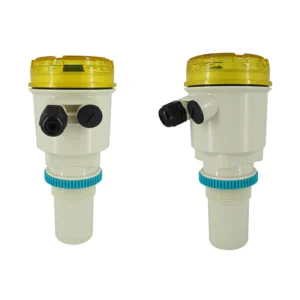
AM-ULM Ultrasonic Level Meter
Non-contact ultrasonic level meter for open tanks, sumps and channels, with a small blind zone and a Modbus output.
AM-ULM-B
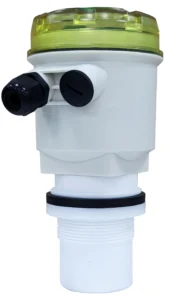
AM-ULM-B Small Blind Area Ultrasonic Level Meter
Short-span ultrasonic level meter for shallow wells and tanks: 0–3 m, blind zone under 0.1 m, ±0.15 % and 1 mm resolution, 4–20 mA or Modbus.
AM-ULM-D
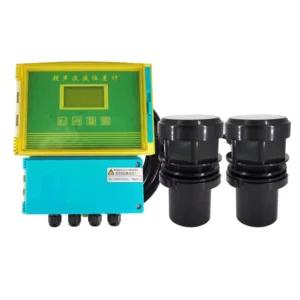
AM-ULM-D Ultrasonic Level Differential Meter
Two-probe ultrasonic differential level meter: 0–25 m difference range, ±0.5 %, two relays, 90–240 V AC or 12–24 V DC, 4–20 mA and Modbus.
Measuring point does not match the table above?
Send the medium, the pipe size and the output your control system expects. We answer with the principle that fits, or with the reason none of ours does.