
Electromagnetic
AM-MFM Electromagnetic Flow Meter
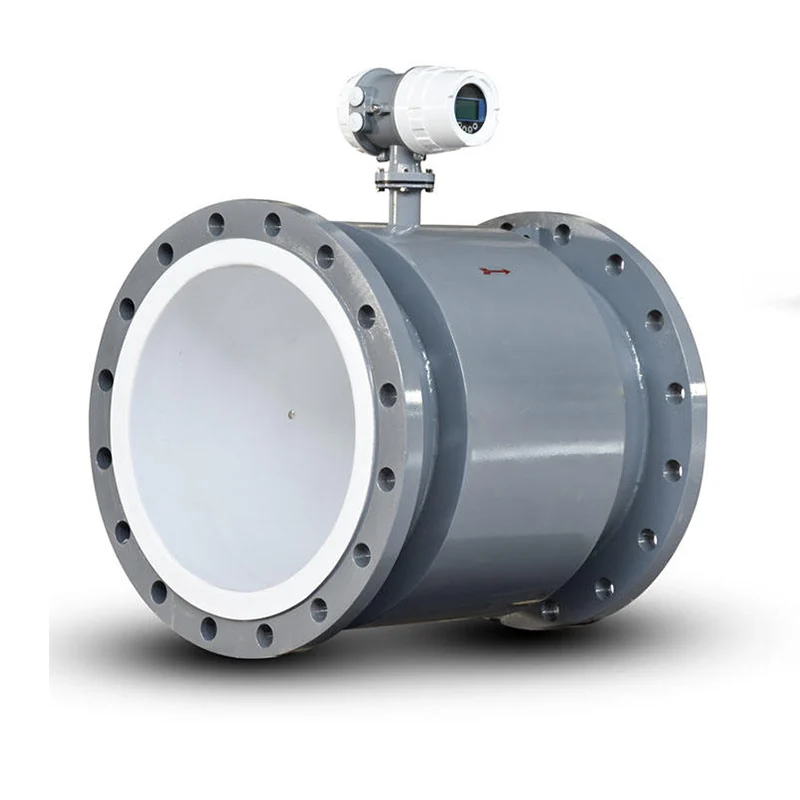
Obstructionless electromagnetic flow meter for conductive liquids and two-phase slurries, DN6–DN2600, with five liners and seven electrode materials.
- Model
- AM-MFM
- Category
- Electromagnetic
- Outputs
- 4–20 mA, Pulse, HART
- Lead time
- 7–10 working days for DN6–DN300 in standard trim; larger sizes and PTFE liners on request
- MOQ
- 1 unit; 10 pcs for OEM branding
- OEM available
- Yes
The medium is the conductor. A pair of electrodes in the pipe wall reads the voltage the liquid generates as it crosses a magnetic field, so nothing sits in the flow path, nothing wears, and the reading does not depend on pressure, density or viscosity.
That makes the choice of this meter three decisions, not fifteen: the liquid has to carry at least 5 µS/cm, the pipe has to run full, and the liner and the electrode have to survive the medium. The rest — DN6 to DN2600, thread, flange or tri-clamp, integrated or separated converter — is configuration.
Technical specifications
| Measuring principle | Electromagnetic, full bore: nothing sits in the flow path |
|---|---|
| Medium | Liquid or solid–liquid two-phase fluid, conductivity ≥ 5 µS/cm |
| Line size | DN6–DN2600 |
| Body style | Inserted type; integrated or separated converter |
| Liner | Rubber, polyurethane (PU), chloroprene (CR), PTFE, FEP (F46) |
| Liner temperature limit | CR < 80 °C; PU < 80 °C; PTFE < 140 °C; F46 < 180 °C |
| Electrodes | SS316L, Hastelloy B, Hastelloy C, titanium, tantalum, platinum, tungsten carbide |
| Process connection | Thread, flange, tri-clamp |
| Output | 4–20 mA, pulse, frequency |
| Communication | RS485; HART optional |
| Power supply | AC 86–220 V, DC 24 V, battery |
| Flow direction | Bidirectional |
| Accuracy | ±0.5 % of reading standard, higher-accuracy option on request — confirm for your DN on the datasheet |
Every value above is on the datasheet: AM-MFM Electromagnetic Flow Meter Datasheet (PDF · 661.5 KB)
What it is not the answer for
Read this before asking for a price: one of these conditions is what turns a good meter into a bad installation.
- Liquids below 5 µS/cm: deionised water, most solvents, oils and gases carry no signal the meter can read
- Pipes that do not run full: a partly filled pipe reads low, so the meter belongs in a section that stays full
- Media hotter than the liner allows: above 140 °C with PTFE, above 180 °C with F46
- Non-conductive pipework without grounding rings, or a line with no reliable ground: the signal floats and the reading wanders
- Highly abrasive slurries beyond the liner's wear class: a Doppler meter is the better answer there
Maintenance and service life
No moving parts, but not maintenance-free. The electrodes and the liner are what drifts: a fouling film on the electrodes is the usual cause of a reading that falls to zero or wanders, so the cleaning interval follows the medium rather than a fixed number of years. After cleaning, check the zero with the pipe full and the flow stopped, and recalibrate when the reading at a known flow no longer matches. State the verification interval your process has to meet when you order, and it is written into the supply.
On site
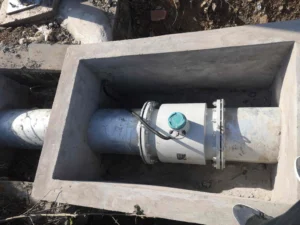
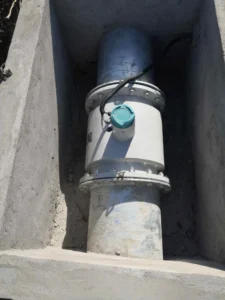
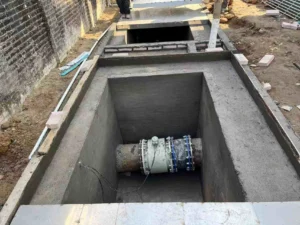
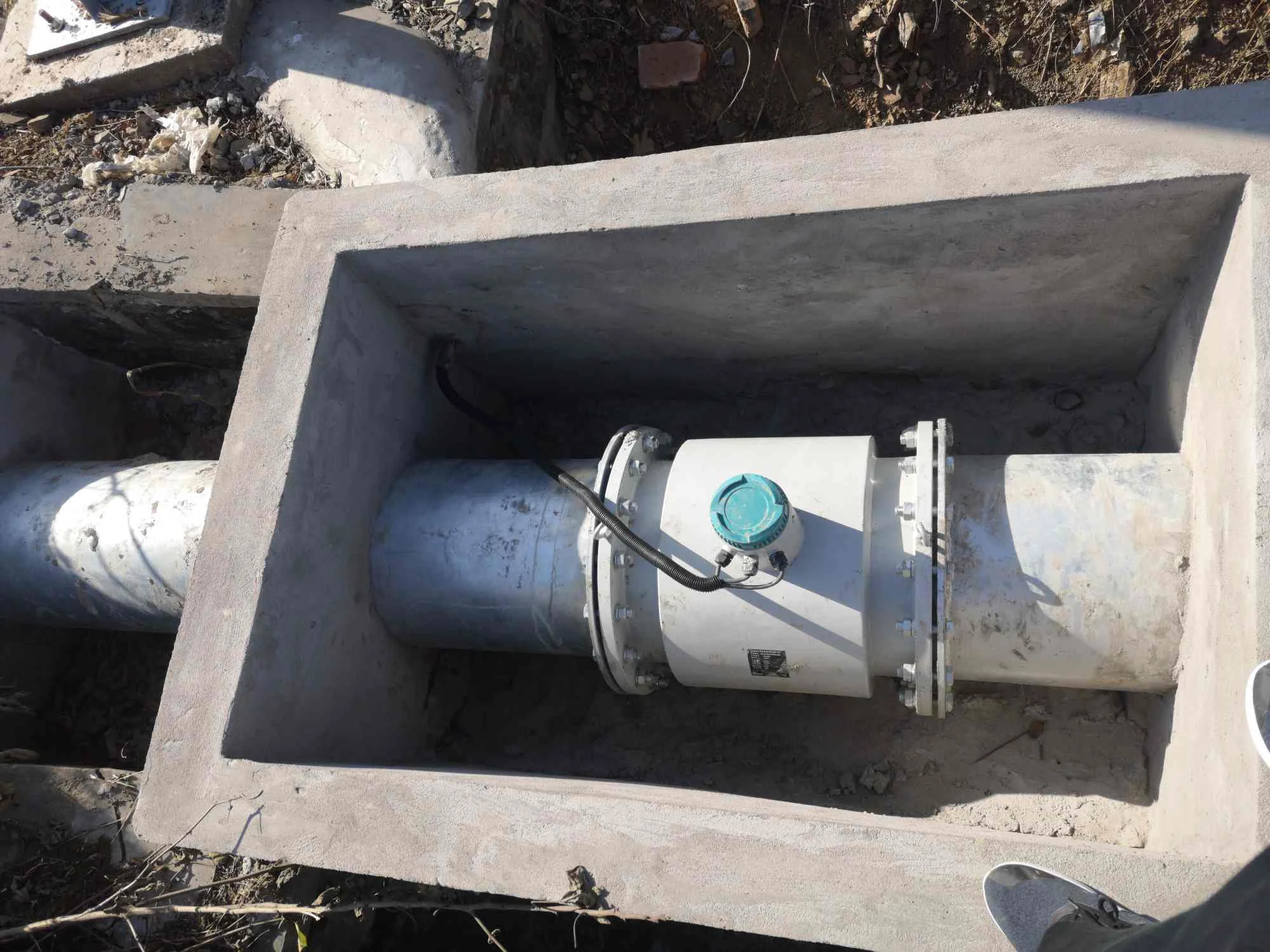
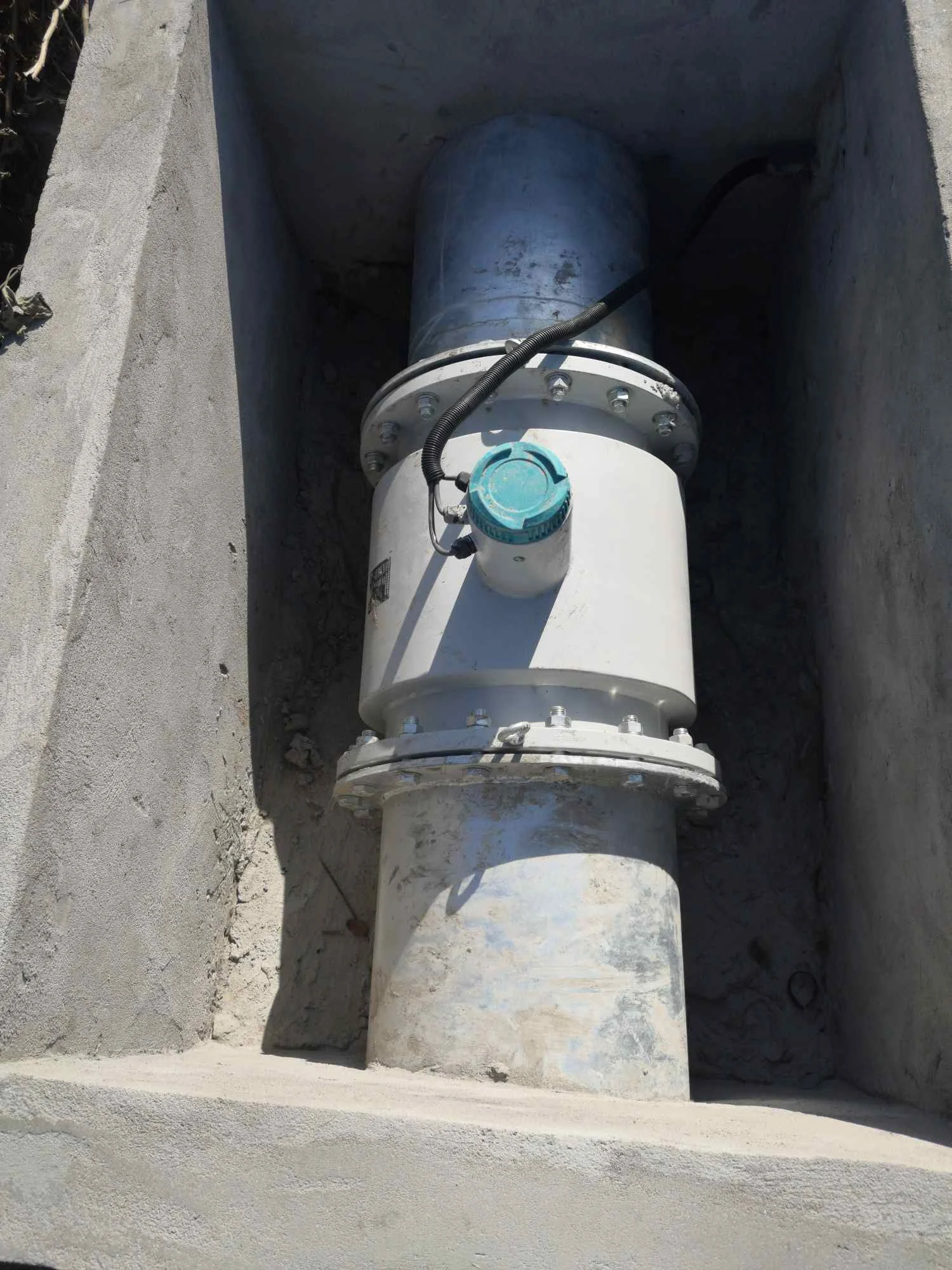
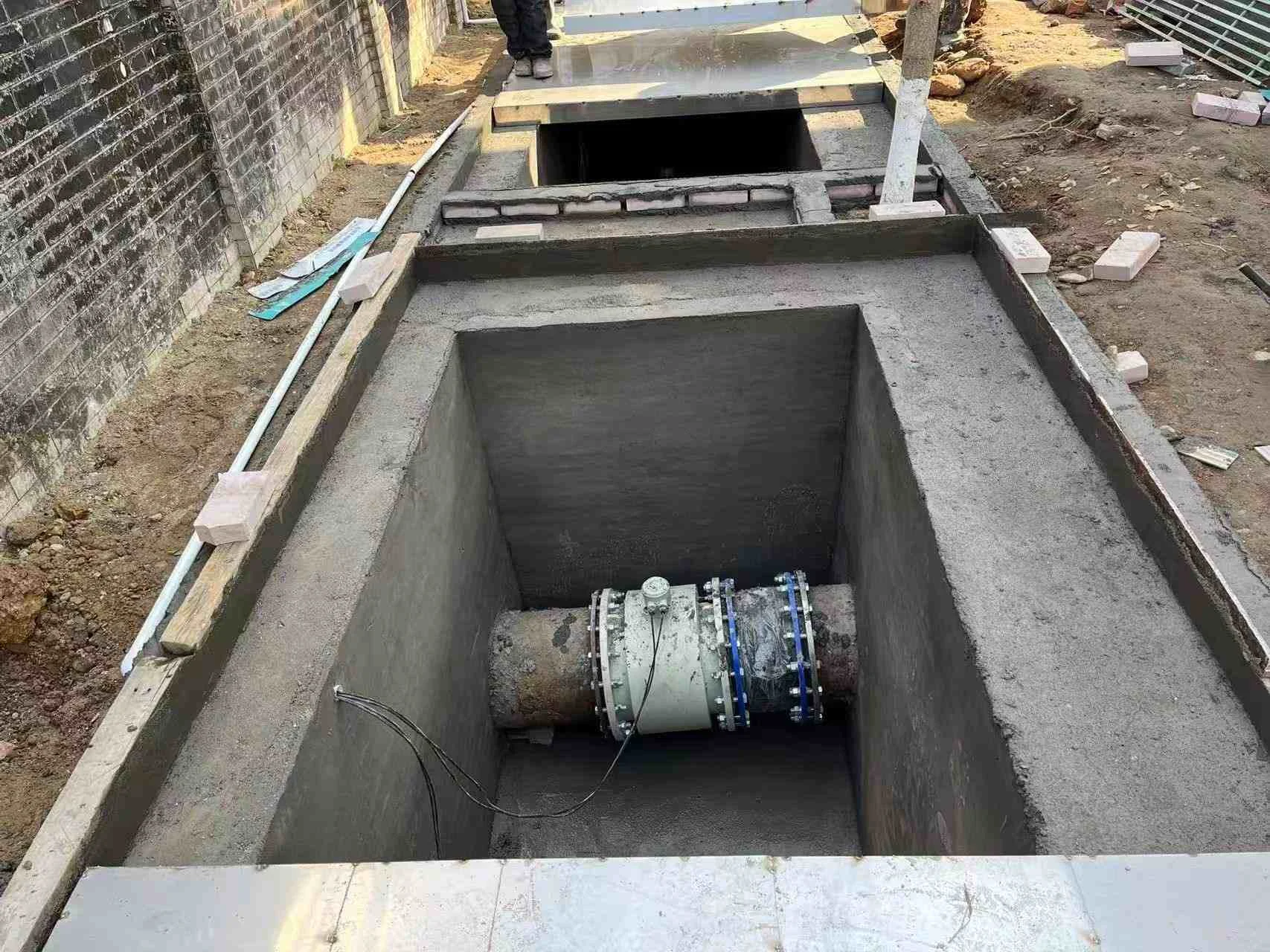
The unit in a plant pipe run: full bore, grounded, in a section of pipe that runs full. What the photographs show is the installation the reading depends on.
What buyers ask before ordering
- Can it measure a liquid that hardly conducts?
- No. Below 5 µS/cm — deionised water, most solvents, oils and gases — there is no usable signal. If your medium sits near that limit, send us the conductivity reading instead of the medium name and we will say which principle does work.
- Why does my reading not reach the accuracy on the datasheet?
- In the field it is almost always the installation: too little straight run, a gas pocket, a joint gasket protruding into the bore, poor grounding, or an electrode that has filmed over. The electronics rarely cause a drift that grows slowly.
- How much straight pipe does it need?
- Five diameters upstream and three downstream, measured from the electrode plane. After a double bend, a partly open valve or a pump outlet, plan on ten and five — and never at the highest point of a line, where air collects.
- Do I have to ground it, and what if the pipe is plastic or lined?
- Yes: the medium has to be at the same potential as the meter, with its own ground conductor rather than the pipe's. On plastic or internally lined pipe, fit grounding rings; without them the signal floats and the reading wanders.
- Which liner and which electrode do I need?
- The medium decides both. CR and PU take neutral and mildly aggressive water, PTFE and F46 take acids and hot media up to 140 °C and 180 °C. SS316L suits water and weak acids; Hastelloy C for oxidising and mixed acids, Hastelloy B for hydrochloric acid, titanium for chlorides, tantalum and platinum for the aggressive cases.
- What output do I order for my control system?
- 4–20 mA for an analogue input card, pulse or frequency for totalising, RS485 where the PLC polls registers, HART where the loop is already HART. Battery supply exists for sites without mains power; say so in the enquiry.
- Integrated or separated converter?
- Integrated when the pipe is accessible, dry and not vibrating. Separated when the meter is buried, submerged, in a hot line or hard to reach — the converter goes where someone can read it.
- What do you need from me to quote?
- Medium and its conductivity, line size, flow range, temperature and pressure, the output your control system expects, and whether this is a new project, a replacement, an OEM order or a trial unit. The form on this page asks for exactly that.
Applications
Where this model is used
Each application names a measuring point and the conditions that decide the selection.
WW-FL
Municipal Wastewater Inlet Flow Measurement
Inlet and outlet flow in raw sewage, where solids, gas entrainment and short straight runs defeat clean-liquid meters.
WW-IP
Industrial Process Measurement
Flow, level and water quality in chemical, food and pharmaceutical processes, where wetted materials and signal compatibility decide the choice.
WW-SL
Sludge Transfer and Blanket Level
Sludge transfer flow and blanket level in settling tanks, where coating and low velocity defeat clean-liquid instruments.
Field notes on this measurement
Elsewhere in the range
Other models in Flow Measurement
The same category holds the models that solve the neighbouring problem, and the price difference is usually smaller than the cost of the wrong principle.
AM-DFM
AM-DFM Doppler Flow Meter
Doppler ultrasonic flow meter for sludge, slurry and raw wastewater where the liquid carries enough solids or bubbles to reflect the signal.
AM-LTF
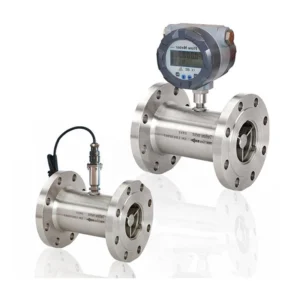
AM-LTF Liquid Turbine Flow Meter
Liquid turbine flow meter for clean, low-viscosity liquids, with a wide turndown and a pulse output for batch control.
AM-OCFM
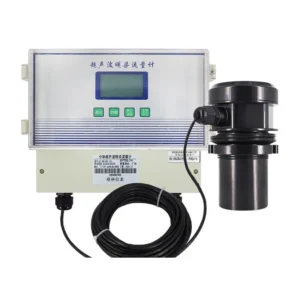
AM-OCFM Open Channel Flow Meter
Open channel flow meter for flumes, weirs and non-standard channels, with the site's own head-flow table entered directly.
Content plan — certificates and case references
- The declarations that apply to this model: CE, RoHS and any hazardous-area approval, each with its certificate number and the body that issued it.
- One or two installations: plant type, medium, model supplied and what the reading is used for. Customer name only where written permission exists.
Measuring point does not match the table above?
Send the medium, the pipe size and the output your control system expects. We answer with the principle that fits, or with the reason none of ours does.